
10 Questions to Ask Before Signing a Flexible Office Lease
Flexible office agreements are designed to be simple. Most are. But "simple" doesn't mean "read it once and sign it." A membership agreement, licence, or flex lease is still a legal and financial commitment — and the things that aren't spelt out clearly at the start have a way of becoming problems at the end.
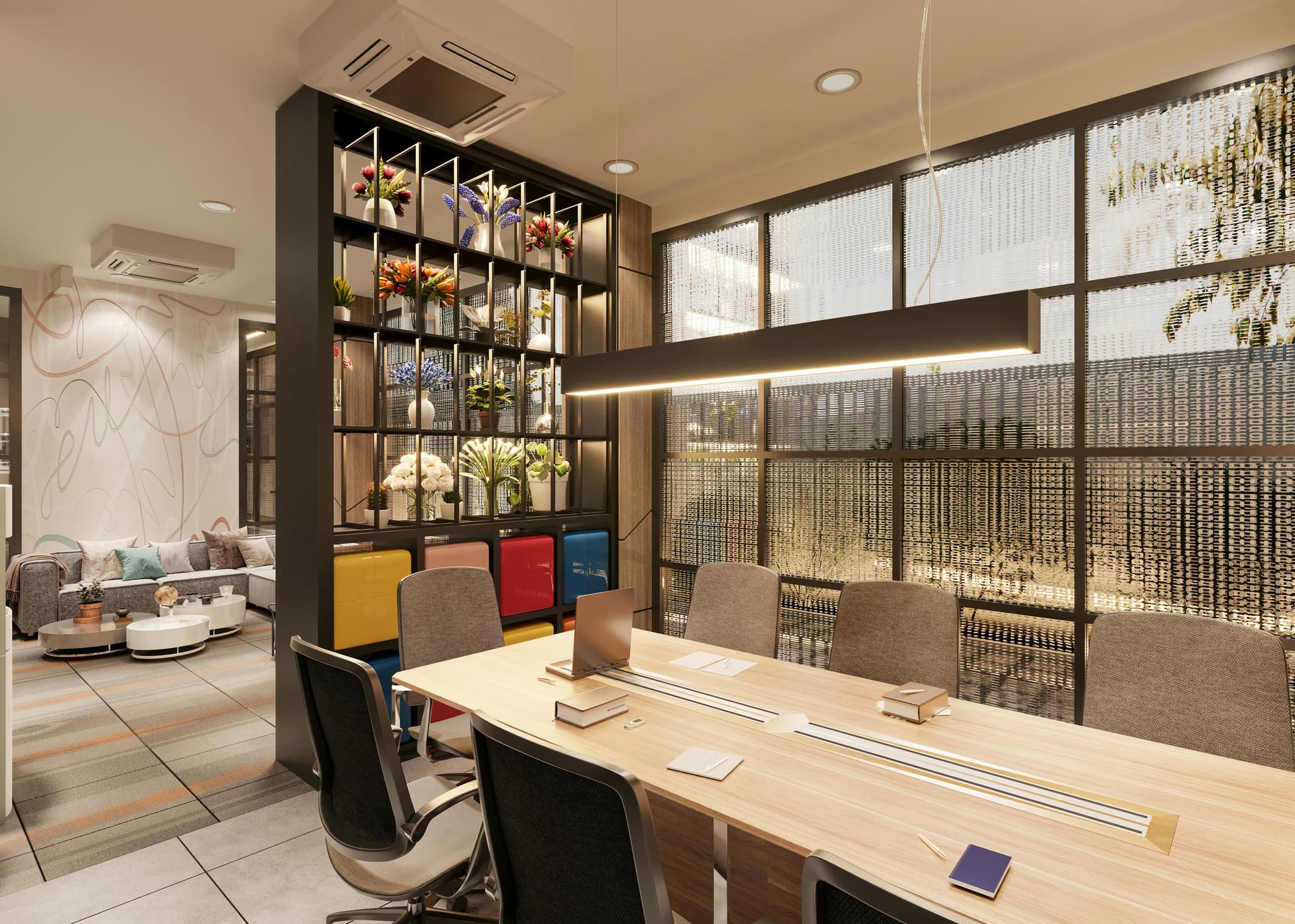
Flexible office agreements are designed to be simple. Most are. But "simple" doesn't mean "read it once and sign it." A membership agreement, licence, or flex lease is still a legal and financial commitment — and the things that aren't spelt out clearly at the start have a way of becoming problems at the end.
These ten questions will take you fifteen minutes to work through. They could save you thousands, protect your business from surprise costs, and ensure the space you choose actually matches how your team works.
Ask every single one before you sign anything.
1. What's Actually Included in the Monthly Fee — and What's Not?
This is the single most important question, and it's the one most people forget to ask precisely enough.
Two spaces can be priced at $550/month with dramatically different inclusions. One bundles Wi-Fi, cleaning, kitchen, printing, and meeting room credits. The other charges separately for all of it.
Ask for a written inclusions list. Specifically confirm the status of:
- Wi-Fi — shared or dedicated? Is a VLAN available for your team?
- Meeting rooms — how many hours per month are included, if any? What's the per-hour rate beyond that?
- Printing — is there a page allowance, or is it pay-per-use?
- Kitchen and coffee — complimentary, or charged?
- Cleaning — daily or weekly? Is your desk space included, or only common areas?
- Mail and business address — is this included, or an add-on at $50–$100/month?
Most operators will have a service description document. If they don't produce one unprompted, that tells you something.
2. What Is the Minimum Term and the Notice Period to Exit?
These are two separate questions, and conflating them leads to nasty surprises.
Minimum term is how long you are committed to the agreement before you can leave without penalty. Month-to-month is genuinely month-to-month at most reputable operators. But some budget spaces quietly embed a 3-month minimum in the fine print. At longer tiers — dedicated desks and private offices — minimum terms of 6 or 12 months are common.
Notice period is how much advance notice you must give to exit at the end of your term. Industry standard in Australia is one month's notice. Some operators require two months for dedicated desks and private offices. On a 6-month minimum with 2 months' notice, you need to decide whether you're staying or going before month 4 — which is worth knowing before you sign.
Both figures should be explicitly stated in the agreement. If they're not, ask for written confirmation before signing.
3. How Does Pricing Change at Renewal?
Flexible doesn't always mean your price stays flat. Ask directly:
- Is there an annual price increase clause, and if so, by what mechanism (CPI, fixed percentage, operator discretion)?
- What happens to pricing at month-to-month renewal after an initial term?
- Have prices at this location increased in the past 12 months?
It's also wise to ask about renewal escalations: potential increases in lease prices that can kick in once you renew if the operator has decided to increase their fees. This doesn't mean they will, but it's worth knowing if it's a possibility.
On a 12-month term with a 3% annual escalation, a $700/month desk becomes $721/month at renewal. That's not alarming — but it's worth budgeting for, not discovering on your next invoice.
4. Can I Scale Up or Down Mid-Term?
One of the core advantages of flexible workspace over a traditional lease is the ability to adjust headcount without renegotiating an entire agreement. But not all flexible agreements are equal on this point.Ask:
- If I add two people, can I add desks immediately, or do I need to wait until renewal?
- If my team shrinks, can I reduce desks and pay less — or am I locked to my current commitment?
- Is there capacity in this space if I do need to expand?
The answers are particularly important for fast-growing businesses and for anyone with genuine uncertainty about headcount over the next 6–12 months. A flexible office that can't actually flex isn't delivering the core value proposition.
5. What Are the Access Hours — and Is 24/7 Access Included?
Not all memberships include the same access hours. Day pass holders and hot desk members are typically limited to business hours (often 8:30am–5:30pm, Monday to Friday). Dedicated desk and private office members usually get 24/7 access — but confirm this explicitly.If your team works across time zones, keeps early or late hours, or needs weekend access for tight deadlines, restricted access hours are a daily operational frustration, not just an abstract concern. Before signing, ask about the building's security features and whether secure access outside business hours is available and how it works — keycard, app, or attended reception.
6. What Is the Deposit, and Under What Conditions Is It Returned?
Most Australian flexible workspace operators require a deposit — typically one month's fees, sometimes two for private office suites. This is standard and reasonable.What matters is the conditions for its return:
- Is the deposit refundable in full, or are there deductions for cleaning, damage, or outstanding fees?
- How long after exit does the operator have to return the deposit?
- Is the deposit held in a separate account, or commingled with the operator's operating funds?
Operators with straightforward, fair deposit terms will answer these questions directly. Any evasiveness is worth noting.
7. Can I Use This Address for My ABN, ASIC Registered Office, and Business Mail?
This question matters far more than many first-time coworking tenants realise. There are three distinct uses of an office address, and coworking agreements handle them differently:- Trading address (where you operate day-to-day): almost always permitted
- Mail handling address (where business mail is received): usually included at some operators, add-on at others
- Registered office address (ASIC-registered): requires explicit written consent from the operator; not automatic
8. What Is the IT Infrastructure, and Is There a Backup?
Wi-Fi reliability is non-negotiable. Frequent downtimes can cost your business a significant amount per hour. Ensure the space has reliable tech support and secure internet access through enterprise-grade measures.
Ask specifically:
- What is the internet speed and is it shared across all members or dedicated to your office?
- Is a dedicated VLAN available for your team's devices? (Critical for businesses with data security requirements)
- What happens if the internet goes down — is there a backup connection?
- Is there on-site IT support, and what's the response time?

9. Who Are the Other Tenants in the Building?
This question is less commonly asked and more commonly regretted when skipped.Flexible office buildings are multi-tenant environments. The other businesses in the space affect your day-to-day experience in ways that go beyond noise levels. A direct competitor in the same building, a high-traffic client-facing business running events in shared areas, or a startup culture that doesn't match your team's working style can all create friction that a tour on a quiet Tuesday afternoon won't reveal.
When you begin looking, ask the question: are we happy to be in a building with other companies in our industry? Also worth asking:
- What industries are most of the current tenants in?
- Are there any businesses that generate significant foot traffic or noise?
- What's the noise level like during peak hours (typically 10am–3pm)?
10. What Does the Exit Process Look Like?
Most people focus entirely on the entry process — the tour, the pricing, the membership terms. The exit process is where the relationship with an operator is truly tested, and understanding it upfront saves significant stress later.
Ask:
- What is the process for giving notice? Written notice only, or can it be given via email or app?
- Are there any make-good or reinstatement requirements? (For private offices with custom branding or fit-outs)
- What outstanding fees need to be settled before exit?
- How is the deposit returned, and in what timeframe?
- Is there an early exit penalty if I need to leave before the end of a minimum term?
A Quick Pre-Signing Checklist
Before you sign, confirm you have clear answers to all ten questions in writing. The minimum you need documented:- Written inclusions list (what's in vs. add-on)
- Minimum term and notice period in the signed agreement
- Pricing and escalation terms for renewal
- Written confirmation of address usage permissions (ASIC, mail, trading)
- IT infrastructure specification (speed, VLAN availability, backup)
- Deposit amount and refund conditions
- Exit process and any make-good obligations
If a reputable operator hesitates on any of these, or provides only verbal assurances, it is always worth asking for written confirmation before proceeding. Be cautious about relying on promises made over email or in the tour — if a promise matters, ask for it to be reflected in the agreement.
Ready to Start Comparing?
Armed with these questions, you're in a strong position to evaluate any flexible office agreement with confidence — and avoid the surprises that catch most businesses out.
Browse office space for rent across Australia on OfficeFlexFinder to compare flexible offices, coworking spaces, and serviced suites — with verified pricing and transparent inclusions across every major city and region.
You can also explore:
- How to find and book flexible office space: step-by-step
- Coworking vs traditional lease: the true cost for SMEs
- Serviced office vs coworking: which is right for your team?
- How much does coworking cost in Australia in 2026?
About OfficeFlexFinder: We help Australian businesses, freelancers, and remote workers find and compare flexible office space — from hot desks to private offices and serviced suites — across every major city and region in Australia.
Arthur Truong
Content Editor
Office space specialist helping businesses find their perfect workspace.
