
Serviced Office vs Coworking Space: Which Is Right for Your Team?
Comparing serviced offices and coworking spaces in Australia? This guide breaks down the key differences in cost, privacy, flexibility, and team size so you can choose with confidence.
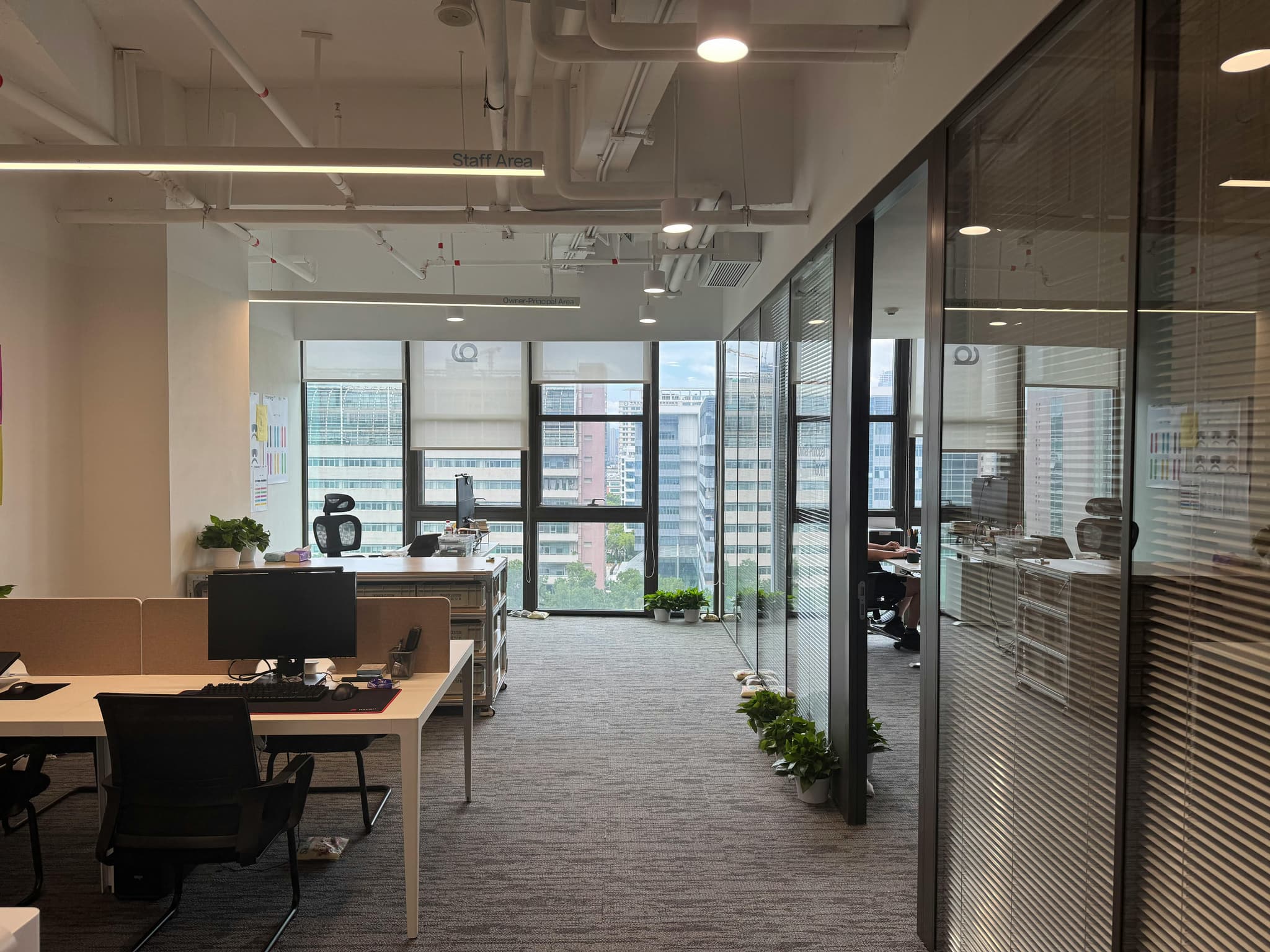
Both terms get used interchangeably. They shouldn't be. A serviced office and a coworking space are built on the same foundation — flexible terms, furnished space, included amenities — but they are designed for very different kinds of businesses, working in very different ways.
Getting this decision right matters. Choose coworking when you need a serviced office, and you'll spend the next three months frustrated by noise, shared printers, and the distinct lack of anywhere confidential to take a client call. Choose a serviced office when coworking would have done the job, and you'll pay a premium you didn't need to.
This guide draws a clear line between the two, walks through where each wins, and helps you make a confident decision for your team.
What Is a Serviced Office?
A serviced office is a private, fully furnished office suite within a professionally managed building. You rent the entire space — it's yours, with a door you can close, usually a dedicated reception, and IT infrastructure that's already running when you arrive. The operator handles cleaning, maintenance, utilities, and building management. You just show up and work.
Serviced office suites are typically larger spaces — often thousands of square feet — designed for teams of between 20 and 100 or more employees, with service and support as a foundational element, including an on-site team that handles office management.
In Australia, the major serviced office providers include Servcorp, Regus (IWG), Christie Spaces, The Work Project, and Hub Australia's enterprise tier. Regus alone operates across 80 locations in Australia, covering every major city and many suburban markets.
What's typically included in a serviced office:
- Private, lockable office suite (your space, your team only)
- Furnished with desks, chairs, and storage
- Tier-1 internet with dedicated bandwidth options
- Reception and concierge services
- Cleaning and building maintenance
- Access to shared meeting rooms
- Business address and mail handling
- 24/7 access
Check out: Serviced office in Australia
What Is a Coworking Space?
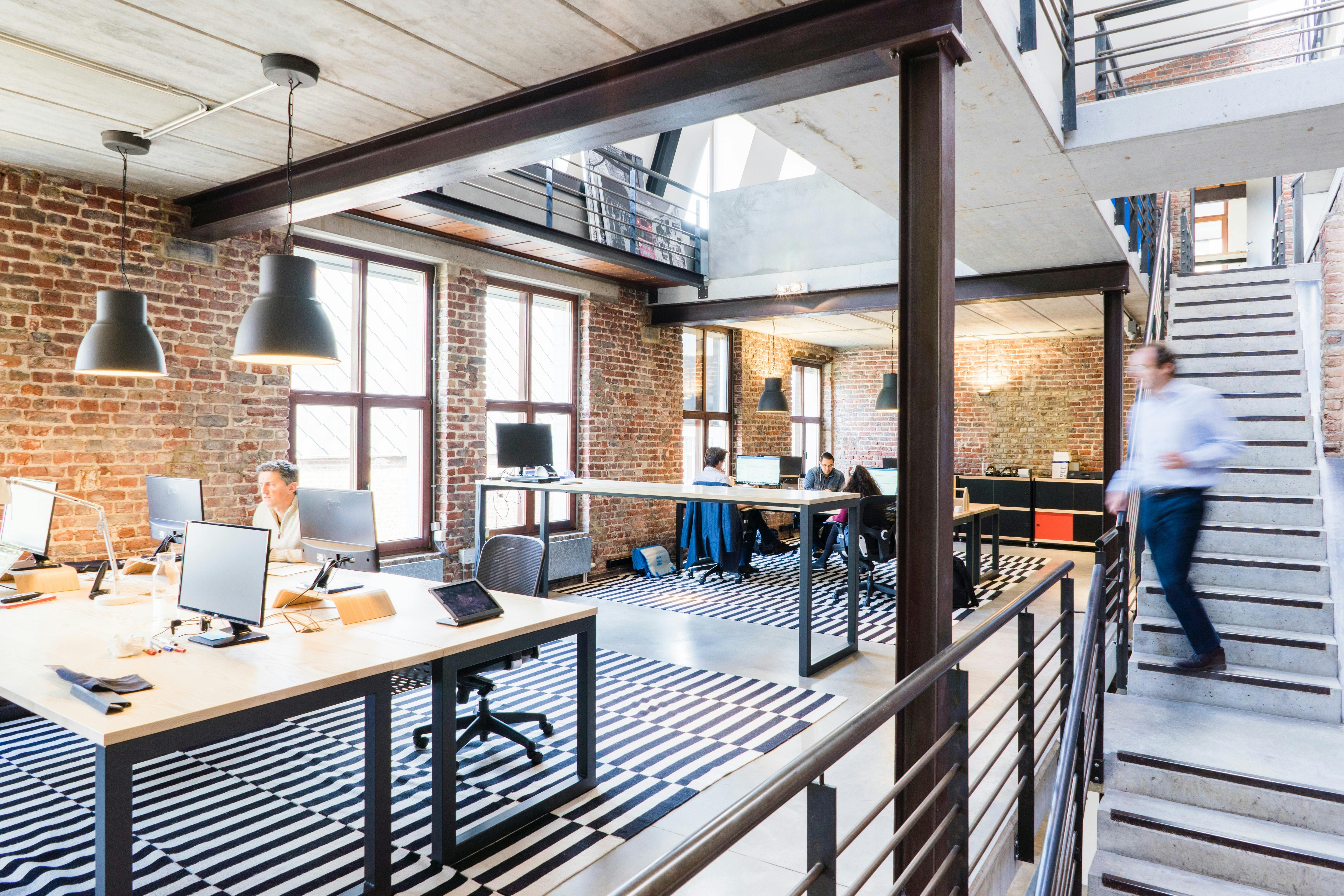 A coworking space is a shared working environment where individuals and teams from different companies work alongside one another. Membership tiers range from hot desks (unassigned, in an open-plan area) through to dedicated desks and small private offices — all within a shared building and community.
The coworking model uses open-plan layouts where individuals from various companies work collaboratively in a shared environment, with a core emphasis on shared amenities, promoting a collaborative atmosphere, and maximising human connection.
The Australian coworking market is now worth AUD $537 million and growing fast, with WeWork, Hub Australia, The Commons, Tank Stream Labs, and WOTSO among the leading operators nationally.
What's typically included in a coworking membership:
- Access to shared desks or a dedicated desk in an open-plan space
- High-speed shared Wi-Fi
- Kitchen, coffee, and communal amenities
- Community events and networking
- Meeting room access (often paid separately per booking)
- Optional: small private office suites within the shared building
Check out: Co-working Spaces in Australia
The Key Differences: Side by Side
| Serviced Office | Coworking Space | |
|---|---|---|
| Privacy | Full — your team only | Shared open-plan; some private options |
| Ideal team size | 4–100+ people | 1–10 people (solo to small team) |
| Cost per desk | $600–$1,100+/month (CBD) | $400–$850/month (CBD hot desk) |
| Contract length | 1–12+ months | Day pass to monthly |
| Branding | Your space, your identity | Shared environment |
| Community | Your team only | Cross-company, collaborative |
| IT & security | Dedicated, enterprise-grade | Shared network (VLANs available at some) |
| Reception | Dedicated receptionist | Shared or none |
| Best for | Established teams, client-facing businesses | Freelancers, startups, hybrid teams |
Where Serviced Offices Win
Privacy and confidentiality
This is the clearest advantage. If your work involves sensitive client data, legal documents, financial information, or confidential conversations — a serviced office is not optional. Shared workspaces rely on communal technological infrastructure, which increases the risk of security breaches and data leaks, a concern particularly critical for industries dealing with highly sensitive client information such as legal, financial, and healthcare sectors.
A private office with a lockable door, a dedicated network, and a controlled entry point eliminates those concerns in a way that even the best coworking space cannot fully replicate.
Predictable costs at team scale
For teams of five or more, the per-desk economics of a serviced office often outperform coworking. A serviced office saves businesses from spending separately on maintenance, cleaning, and utilities because these are bundled into the package, making budgeting predictable. When you add up five or ten individual coworking memberships — plus meeting room bookings, storage costs, and the add-ons that accumulate — a serviced office suite frequently comes out ahead on total cost of occupancy.
A professional client-facing environment
If you regularly host clients, the impression your workspace creates matters. A serviced office with a dedicated reception, a branded entrance, and a well-appointed meeting room sends a signal that a hot desk in an open-plan space simply cannot. Client-facing businesses benefit from professional boardrooms and meeting rooms included in most serviced office packages.Speed to operational readiness
Serviced offices offer a plug-and-play environment — high-speed internet connections, ergonomic furniture, and regular cleaning services are all included, allowing businesses to hit the ground running and focus energy on what matters most. For a team relocating from a traditional lease or spinning up a new market office, this is significant: a serviced office can be operational in days, not months.
Where Coworking Wins
Cost efficiency for individuals and small teams
For solo operators and teams of one to three, coworking is almost always the more economical choice. Coworking is one of the most affordable flexible workspace solutions, with shared utilities, services, and amenities reducing overhead and making it ideal for startups and freelancers. Members can choose from daily, monthly, or annual plans, with the ability to scale membership as teams grow or shrink.
A hot desk membership in Melbourne or Brisbane at $400–$500/month beats the entry cost of even the smallest private office suite, with no additional overhead.
Community and networking
This is coworking's defining advantage and the one hardest to replicate elsewhere. The density of professionals from different industries, startups, and companies under one roof creates networking opportunities that happen organically — over coffee, in communal areas, at operator-run events. For early-stage founders, freelancers building a client base, or professionals new to a city, this community has genuine professional value.
Maximum flexibility
No lease. No make-good clause. No fit-out project. Month-to-month hot desks can be started and stopped with as little as a week's notice at some operators. For businesses with genuinely uncertain headcount projections — or teams testing a new city before committing — that flexibility has real financial value.
Access to premium addresses on a limited budget
Coworking is also the most accessible route to a prestigious CBD address. A hot desk at a Barangaroo or Martin Place coworking space gives a sole trader the same suburb on their business card as a multinational — for a fraction of the cost of a private office in the same building.
The Grey Area: When the Line Blurs
The honest answer for many teams in 2026 is that the choice is less binary than it used to be. Hybrid-Flex formats — combining coworking, private offices, and enterprise suites — now account for half of all flexible workspace nationally and are driving the majority of growth, reflecting demand from SMEs and corporates seeking greater workplace agility.
Most premium operators now offer both models within the same building. A team of eight can have a small private office suite for focused work and client meetings, with hot desk credits for overflow, all on one agreement. This blended approach is worth exploring before defaulting to one category.
The practical test: If more than half of your workday requires either phone calls you can't take in a shared space, client-facing meetings with privacy expectations, or access to a dedicated secure network — look at serviced offices first. If your team is small, your headcount is uncertain, or collaboration and community are meaningful to how your people work — coworking is the better starting point.
What Does It Cost in Australia? A Realistic Comparison
The per-desk costs of serviced offices and coworking spaces are closer than many expect — but the all-in numbers diverge at team scale.
At WeWork Australia, the average cost for a team of one to four people ranges from $593/month per person in Perth to $1,086/month in Sydney. Regus has serviced offices available for as little as $483/person/month in suburban markets, rising to $1,090–$1,499/person/month in Sydney CBD.
Against that, the traditional alternative is instructive. Cushman & Wakefield's 2025 Fit-Out Cost Guide reveals that fit-out alone runs approximately $2,665/m² in Sydney and up to $2,998/m² in Canberra — before accounting for base rent, cleaning, or administrative support. Once all outgoings are factored in, businesses typically pay 1.5–2 times the headline rent figure.
Both serviced offices and coworking eliminate that upfront capital requirement and those hidden costs. On a full-cost comparison with a traditional lease, both models typically represent meaningful savings for teams under 50 people.
Which Should You Choose?
Choose a serviced office if:
- Your team is 5 or more people (and growing)
- You regularly meet clients and need a professional, private environment
- Your work involves confidential data or regulated industries (legal, financial, healthcare)
- You need dedicated IT infrastructure and a secure network
- You want a branded, exclusive space that reflects your company identity
- Operational predictability matters more than maximum flexibility
- You're a solo operator, freelancer, or team of 1–4
- Community and networking are genuinely valuable to your work
- Your headcount or working patterns are uncertain or changing
- You need maximum flexibility with no lock-in commitment
- You want to access a premium address at a fraction of the private office cost
- You work in a creative or collaborative industry that benefits from cross-pollination
Ready to Compare Options in Sydney?
If you're based in Sydney or looking to set up there, both serviced offices and coworking spaces are available across the CBD, Barangaroo, North Sydney, and surrounding suburbs — at a wide range of price points.
Browse and compare serviced offices in Sydney on OfficeFlexFinder — filter by team size, suburb, budget, and inclusions to build a shortlist in minutes. All listings include verified pricing, transparent inclusions, and tour booking.
You can also explore:
- Best coworking spaces in Sydney CBD
- How much does coworking cost in Australia?
- How to find and book flexible office space: step-by-step
Pricing data sourced from Rubberdesk Q4 2025 National Flexible Office Price Guide, Servcorp Australia, WeWork Australia, and Cushman & Wakefield 2025 Office Fit-Out Cost Guide. All prices exclude GST and are indicative as at April 2026. Contact operators directly to confirm current rates and availability.
About OfficeFlexFinder: We help Australian businesses, freelancers, and remote workers find and compare flexible office space — from hot desks to private offices and serviced suites — across every major city and region in Australia.
Arthur Truong
Content Editor
Office space specialist helping businesses find their perfect workspace.
