
The Rise of Suburban Coworking: Why Businesses Are Relocating
CBD coworking is no longer the default. Here's why thousands of Australian businesses are choosing suburban flex space in 2026 — and what it means for how your team works.
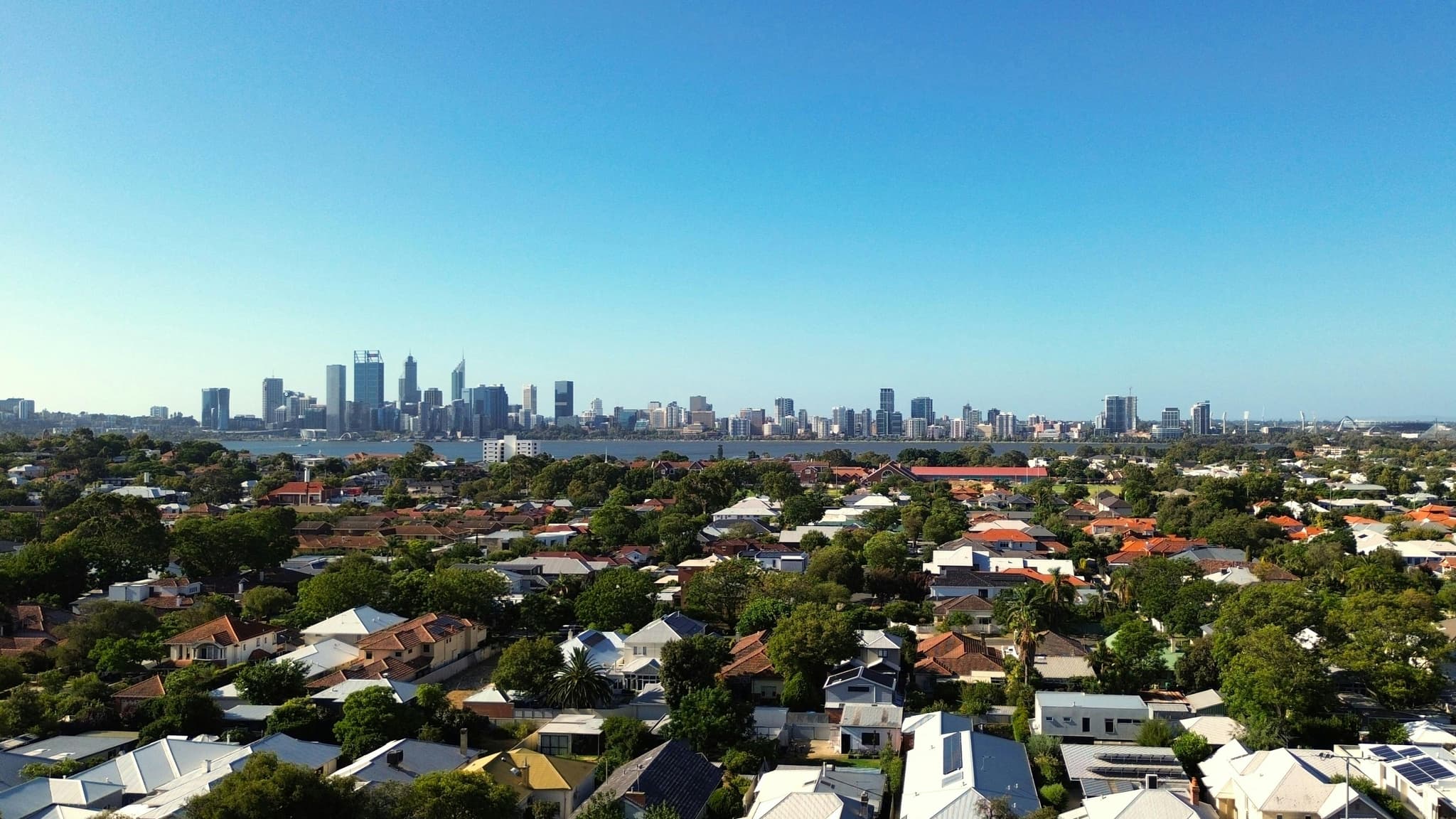
For most of the past decade, the mental model for coworking in Australia looked roughly the same: a glass tower in the CBD, a famous brand in the lobby, and a commute to match. That model still exists — and it still makes sense for plenty of businesses. But it is no longer the default.
A new report from Flexible Workspace Australia found flexible office space supply, occupancy, and pricing all increased through 2025, with growth increasingly coming from outside traditional CBD locations. Operators are opening more locations closer to where people live, particularly in suburban and regional areas, as demand for local coworking hubs continues growing as workers look for alternatives to long commutes into city centres.
This shift is not marginal. It is reshaping how Australian businesses think about where their teams work, what they pay for office space, and what kind of workplace actually earns the commute.
The Data Behind the Shift
Flexible Workspace Australia's 2026 industry report shows the client base of flexible workspaces has moved beyond startups, small businesses, and freelancers to include established corporations. "Co-working is no longer a phenomenon or fad but an established and expected way of working," the report said.The numbers that frame the suburban story are striking. While flexible workspaces make up only a tiny fraction of the 5.3 million square metres of office space in Sydney's CBD, they're starting to dominate: slightly more than half — 53% — of all five-to-ten person offices in Sydney are now flexible workspaces, as are more than three-quarters of all one-to-four person offices.
That dominance at the small-team end of the market is significant because it is precisely small teams — the consultancies, the tech startups, the professional services firms, the creative agencies — that have driven suburban coworking adoption most aggressively. They don't need a Martin Place address to do their best work. They need a desk near where their people live, a reliable internet connection, a proper meeting room when a client visit requires it, and a community of like-minded professionals to work alongside.
Suburban coworking, in 2026, delivers all of that.
Five Reasons Businesses Are Choosing Suburbs Over the CBD
1. Commute Time Has Become a Retention and Recruitment Issue
The relationship between commute time and employee satisfaction has always been inverse. What's changed is the degree to which businesses are now treating it as a strategic variable rather than an unavoidable fact of working life.In Australia's major cities — Sydney in particular, where the average CBD commute from outer suburbs can exceed 90 minutes return — the daily commute is a meaningful cost borne by employees. In a tight labour market, businesses that can offer team members a professional workspace within 15–20 minutes of home carry a genuine competitive advantage in both attracting and retaining talent.
Suburban coworking hubs address this directly. A professional, well-equipped workspace in Hawthorn, North Sydney, Fortitude Valley, or Fremantle means team members can get to their desk in the time it used to take them to clear Central Station. The hours saved compound across a team of ten over a working year into a meaningful quality-of-life improvement — one that increasingly appears in job ads as a genuine benefit rather than a footnote.
2. The Cost Differential Is Significant and Growing
The median desk rate for a coworking space ranges from around $500 per person in central Hobart to $1,000 per person per desk in Sydney's CBD, although spaces outside CBDs are considerably cheaper.The gap between CBD and suburban desk rates in Australia's major cities has widened over the past two years as CBD premium inventory tightened and suburban supply expanded. A hot desk in inner Melbourne's Hawthorn or Richmond typically runs $350–$500/month — 30–40% below an equivalent CBD desk in the same city. A dedicated desk in Brisbane's Fortitude Valley starts at around $350/month versus $500–$550/month in the CBD core.
Across a team of ten people over 12 months, that differential represents a material saving — $24,000–$72,000 annually depending on city and desk type — with no measurable reduction in workspace quality at reputable suburban operators. For cost-conscious SMEs evaluating their office overhead, that arithmetic is increasingly hard to ignore.
3. Landlords Are Actively Building Suburban Supply
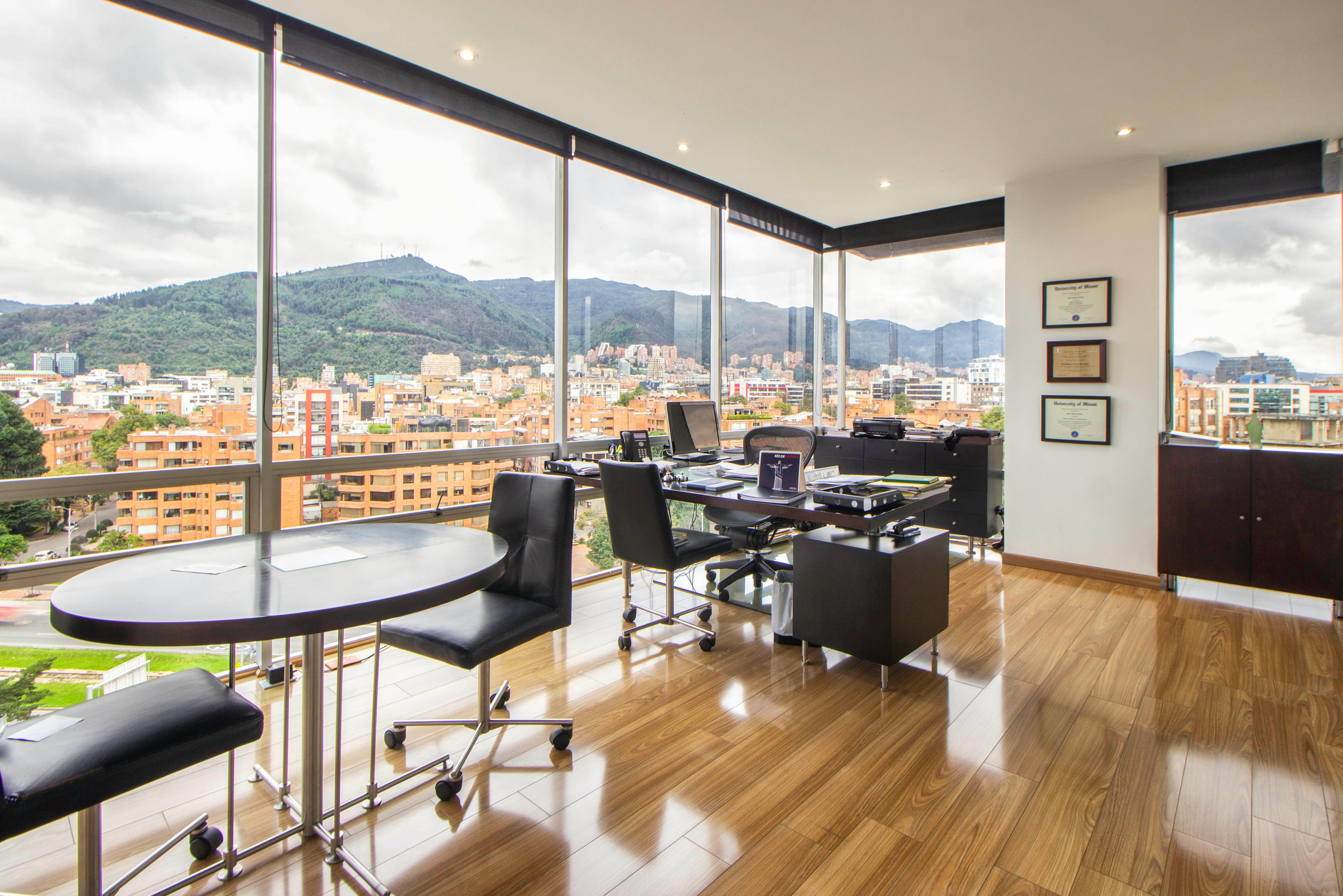
The push into suburbs isn't only coming from businesses. It's being led, in part, by the landlords and property owners who are now treating coworking as essential infrastructure rather than a speculative amenity.Jessie Glew, co-chair of Flexible Workspace Australia and CEO of WOTSO — which has 42 coworking hubs across Australia and New Zealand — has noted: "We are seeing a growing number of landlords wanting to put coworking into their assets, in particular in the suburbs and regions, because they're looking for this service. It's become like the gym or the childcare centre or the coffee shop — it's needed as part of an asset's genetic makeup, because it helps bring people to the asset."
This supply-side dynamic matters because it signals a structural rather than cyclical expansion. Landlords don't retrofit buildings for gym operators or childcare providers unless they're confident of sustained demand. The same logic applies to coworking. When suburban and regional landlords are actively recruiting operators to anchor their assets, the infrastructure underpinning suburban coworking becomes more permanent and more reliable.
WOTSO is actively expanding into Bundaberg, Hervey Bay, and regional NSW centres including Orange — markets that would have been considered too small for purpose-built coworking infrastructure just three years ago. The addressable market, as operators define it, now extends well beyond the inner suburbs.
4. The Work Has Changed — And Suburban Spaces Have Kept Up
The early criticism of suburban coworking was product-based: the spaces were smaller, less well-equipped, and lacking the premium amenities of CBD operators. In 2026, that gap has largely closed at the quality end of the suburban market.The best suburban coworking spaces now offer the same infrastructure that was, until recently, exclusive to CBD operators: enterprise-grade Wi-Fi with VLAN options, professional meeting rooms with AV, ergonomic seating, end-of-trip facilities, and community programming. What suburban spaces have always had — and which CBD spaces frequently struggle to replicate — is a calmer, less congested environment that many professionals find more conducive to focused, productive work.
The typical user of a coworking space varies quite a bit by location, with some WOTSO hubs attracting plumbers and builders, while others are popular with tech workers. A two-to-four person office tends to be the most popular offering. That diversity of use case — trades professionals sharing space with software developers — reflects a suburban coworking community that is genuinely local rather than artificially curated around a single industry vertical.

5. Hybrid Work Has Dissolved the Logic of a Single CBD Office
The deeper structural argument for suburban coworking is this: the traditional CBD office made sense when teams gathered in one place five days a week. When teams gather two or three days a week — and not necessarily on the same days — the single CBD office is a suboptimal solution for a meaningful portion of the workforce.One industry observer has noted a "fundamental shift in how businesses think about office space. Long-term leases are being viewed as a liability. Businesses want premium environments, but they want flexibility, control and the ability to scale up or down without being locked in. Workforces are more dynamic, teams are more distributed and business conditions are less predictable."
A distributed approach — anchored around suburban hubs rather than a single CBD address — maps more naturally to how hybrid teams actually operate. Team members work from the hub closest to where they live on their in-office days. The team gathers at a CBD location for whole-team meetings or client events. No one commutes 90 minutes for a half-empty office experience on a Wednesday.
This hub-and-spoke model is gaining traction particularly among enterprise teams, where the combination of a CBD anchor space and suburban satellite hubs allows businesses to right-size their physical footprint against actual attendance patterns rather than peak theoretical headcount.
The Suburban Markets Leading the Shift in Australia
The suburban coworking expansion is not uniform. Some precincts have developed genuine critical mass that makes them viable alternatives to the CBD — not just cheaper options.Inner Melbourne has arguably the strongest suburban coworking ecosystem in Australia. Hawthorn, Richmond, Fitzroy, Collingwood, and St Kilda Road each offer high-quality flexible workspace at 25–40% below CBD pricing, served by Melbourne's extensive tram network. Hawthorn in particular — a well-connected, amenity-rich inner-east suburb with strong small business and professional services density — has become one of Melbourne's most active suburban coworking markets.
Inner Brisbane's near-CBD fringe — Fortitude Valley, Newstead, Teneriffe, and South Brisbane — has emerged as a genuine alternative to the CBD for creative, tech, and professional services businesses. As covered in our Brisbane precinct guide, these suburbs offer distinct character, lower pricing, and strong professional communities at short tram or cycling distance from the CBD grid.
North Sydney and Parramatta in the Greater Sydney market have absorbed significant demand from businesses that need Sydney presence but not necessarily a CBD address. Parramatta's Western Sydney positioning makes it particularly compelling for businesses serving the demographic and economic weight of Western Sydney, while North Sydney's direct train connection to the CBD removes the location compromise for most use cases.
Suburban Adelaide has demonstrated one of the highest proportions of coworking-to-office-stock ratios of any Australian market, with areas including Norwood, Unley, and North Adelaide developing active flexible workspace scenes at some of the most accessible price points in any Australian capital city.
What This Means If You're Evaluating Office Space Now
The rise of suburban coworking doesn't mean CBD spaces are wrong for your business. For client-facing professional services firms, businesses with interstate or international visitors, or teams where address prestige directly affects commercial relationships, CBD locations continue to offer genuine value that suburban alternatives don't replicate.What it does mean is that the suburban option deserves serious consideration alongside the CBD when you're building your shortlist — and that the quality gap which made "suburban" a compromise choice has largely closed in Australia's major metropolitan markets.
Flexible Workspace Australia's 2026 report projects continued growth across suburban and regional markets, increased adoption by enterprise organisations, and further innovation in how spaces are designed and used, as hybrid work and AI become further embedded in how businesses operate.
The trend is clear, the supply is growing, and the quality is there. The question for your business is simply whether the address matters more than the commute — and increasingly, for most teams, it doesn't.
Explore Suburban Coworking Near You
OfficeFlexFinder lists flexible workspace across every major suburb and region in Australia — not just the CBDs.If you're in Melbourne's inner east, browse coworking spaces in Hawthorn — one of Melbourne's best-connected and most active suburban coworking markets, with options spanning hot desks, dedicated desks, and private offices at prices well below the CBD.
You can also explore:
- Coworking spaces across Melbourne
- Brisbane office space: CBD vs Fortitude Valley vs Newstead
- How much does coworking cost in Australia in 2026?
- The global state of flexible office space: 2026 report
- Why enterprise teams are switching to flex space in 2026
About OfficeFlexFinder: We help Australian businesses, freelancers, and remote workers find and compare flexible office space — from hot desks to private offices and serviced suites — across every major city and region in Australia.
Arthur Truong
Content Editor
Office space specialist helping businesses find their perfect workspace.
