
Hot Desk vs Dedicated Desk: Is the Price Gap Worth It?
Hot desks are cheaper. Dedicated desks are yours. But is the price premium actually worth paying? We run the numbers for Australian coworking members in 2026.
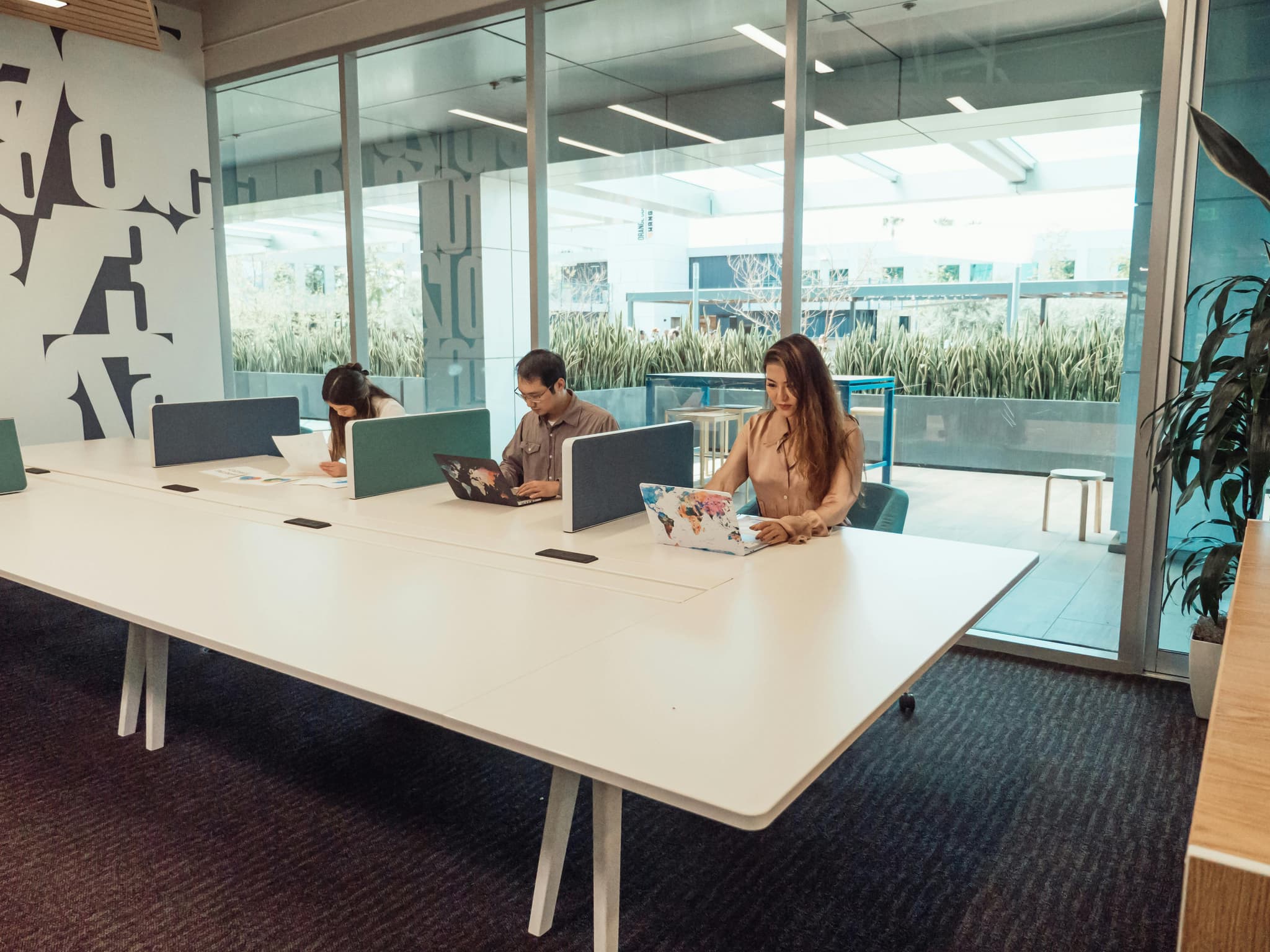
The gap between a hot desk and a dedicated desk is usually somewhere between $100 and $300 per month, depending on city and operator. On paper, that makes the hot desk the obvious choice — you're paying less for essentially the same building, the same Wi-Fi, the same kitchen.
But the two products are not interchangeable. And the "obviously cheaper" option can become the more expensive one once you factor in time, equipment, and the actual pattern of how you use the space.
This guide runs the numbers honestly, compares what each desk type actually delivers, and gives you a clear framework for deciding whether the dedicated desk premium is worth paying for the way you work.
What You're Actually Comparing
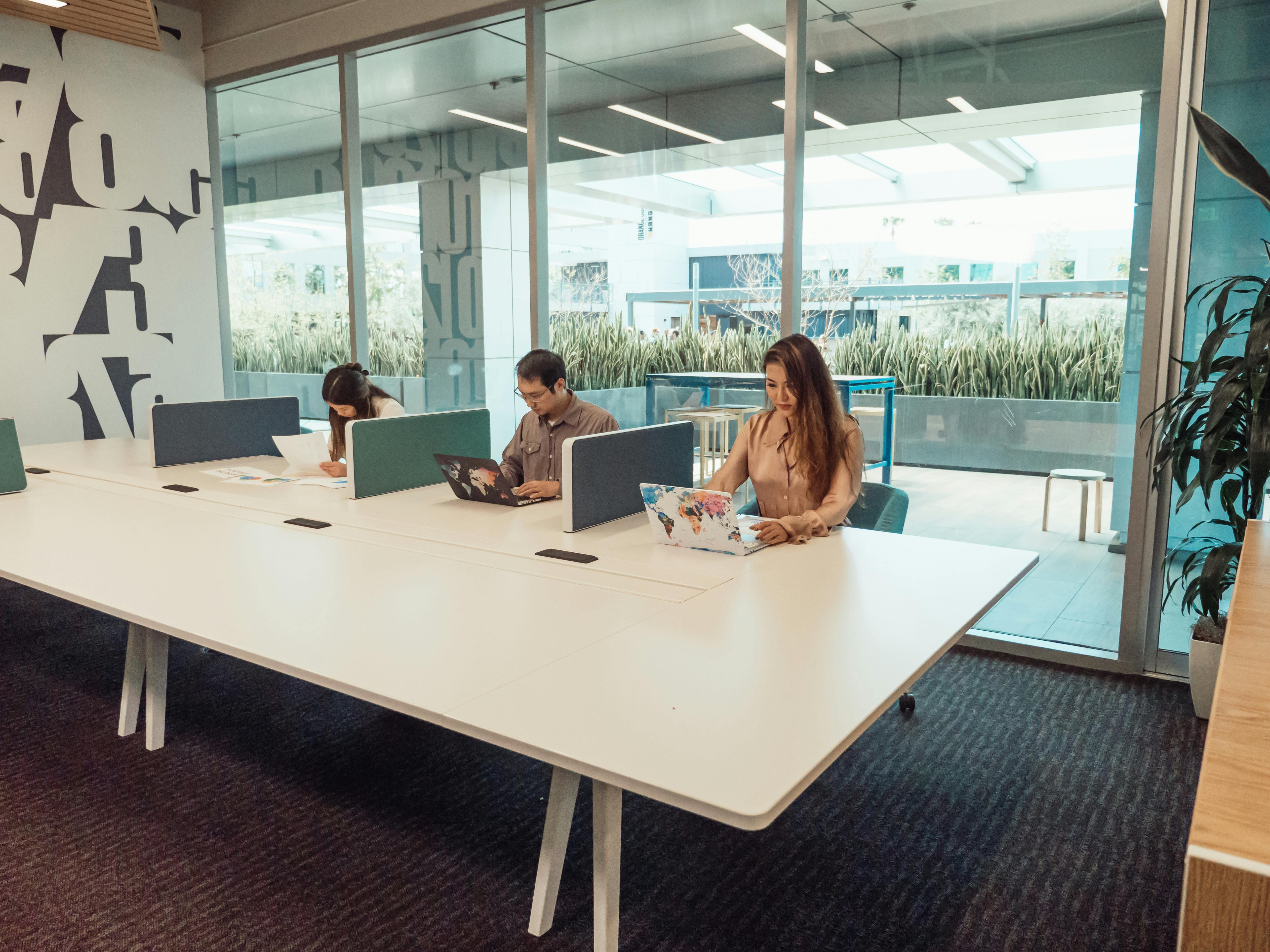
Before the pricing breakdown, a precise definition of each — because loose usage creates confusion.A hot desk is an unassigned workstation in a shared open-plan area. You arrive, pick whatever desk is available, work your session, and pack up when you leave. No permanent spot, no storage, no guarantee of a specific location. Access is typically limited to business hours for standard memberships.
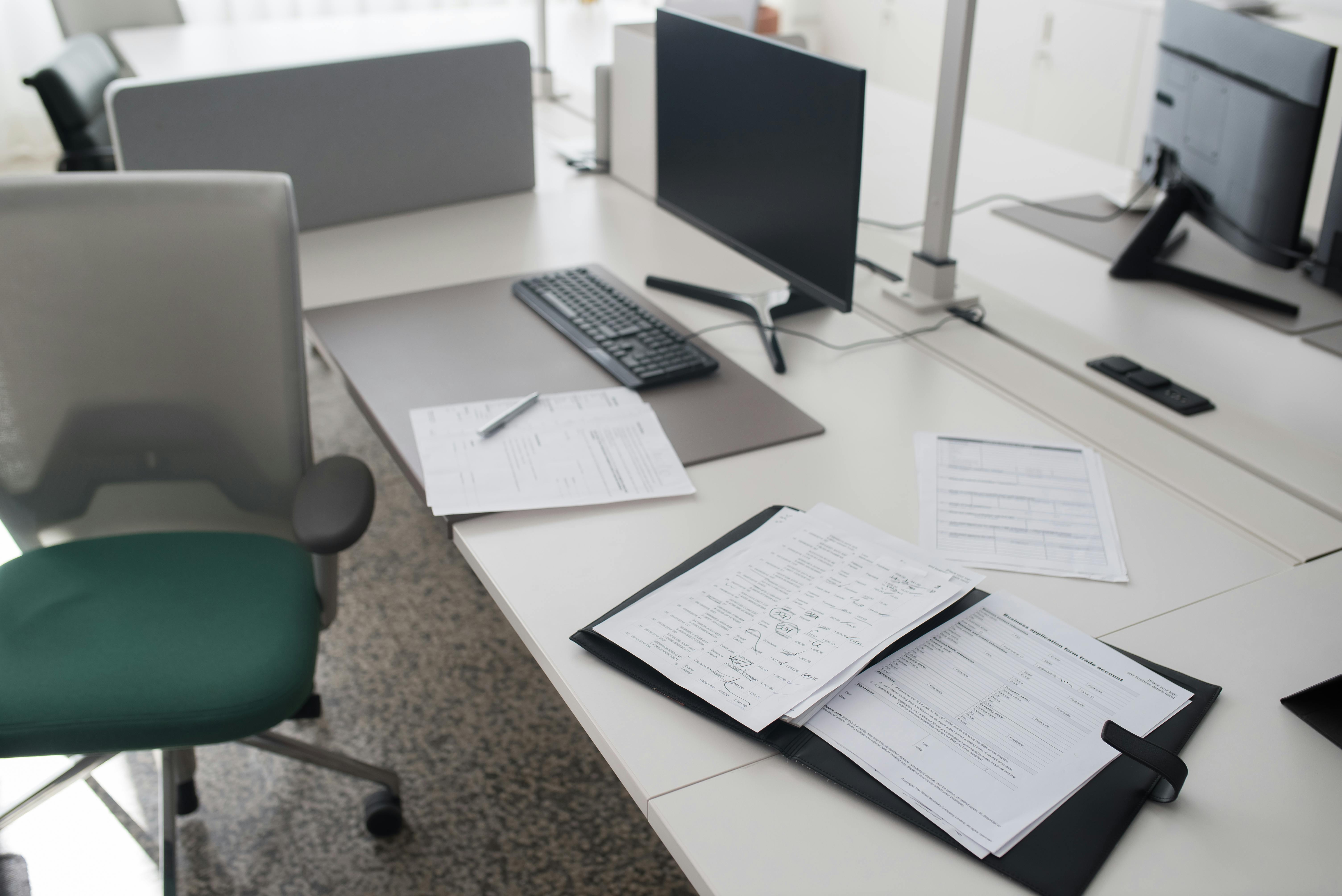
A dedicated desk is a fixed workstation assigned exclusively to you within a shared coworking environment. It's yours every day. You can leave your equipment set up, personalise the space (within operator guidelines), store personal items, and typically access the building 24/7 rather than during business hours only.
Both are coworking memberships — you're sharing the building, the kitchen, the meeting rooms, and the community with other members. The difference is whether your desk is permanent or shared, and everything that flows from that.
The Price Gap: What It Looks Like Across Australia
Sydney's hot desks average $38 per hour or $105 for a full day at casual rates. On a monthly membership, the picture looks like this:| City | Hot Desk (monthly, from) | Dedicated Desk (monthly, from) | Typical Gap |
|---|---|---|---|
| Sydney CBD | $500–$600/month | $700–$950/month | $150–$350/month |
| Melbourne CBD | $340–$500/month | $500–$700/month | $150–$250/month |
| Brisbane | $300–$450/month | $450–$600/month | $100–$200/month |
| Perth | $280–$450/month | $400–$550/month | $100–$150/month |
| Adelaide | $250–$400/month | $380–$500/month | $100–$150/month |
| Canberra | $250–$380/month | $380–$500/month | $100–$150/month |
The national picture: the median hot desk sits at around $479/month; the median dedicated desk at $600–$800/month. The premium for a dedicated desk is approximately 25–60% above the equivalent hot desk at the same operator, with Sydney representing the widest spread.
On an annual basis, that gap compounds:
- $150/month gap → $1,800/year more for a dedicated desk
- $250/month gap → $3,000/year more for a dedicated desk
- $350/month gap → $4,200/year more for a dedicated desk
What the Premium Actually Buys You
The price gap between hot desk and dedicated desk reflects four concrete differences in what you receive. Understanding each one is the foundation of the decision.1. Your spot, every time
The single most valuable feature of a dedicated desk is guaranteed availability. You arrive, your desk is there, your setup is exactly as you left it. No scanning the room for a free spot, no settling for a sub-optimal location because the good desks were taken at 8:30am, no arriving to find the space at capacity on a busy Wednesday.For users who rely on the space four or five days a week, that certainty has real daily value. For users who come in two days a week and are flexible about timing, the guarantee matters far less — hot desks at most reputable operators are available on a walk-in basis without difficulty outside of peak hours.
2. Leave your equipment in place
This is the advantage that is most underestimated in comparisons that focus only on price. A hot desk requires you to pack up every time you leave: laptop, chargers, peripherals, notebooks, desk accessories. A dedicated desk lets you leave it all in place.For a professional running dual monitors, a docking station, a keyboard, and a mouse — the daily pack-in/pack-out ritual on a hot desk is a genuine friction. It takes five to ten minutes each way, requires you to carry more, and resets your ergonomic setup to whatever the hot desk happens to offer that day. A dedicated desk eliminates all of that.
For a professional who works from a single laptop, this advantage largely disappears.
3. Storage for personal items
Most dedicated desk memberships include a lockable pedestal or locker. This means personal items, printed documents, branded materials, books, and work-in-progress physical materials can live at the desk permanently.Hot desk users typically have access to shared lockers — but these are for daily use, not permanent storage. Anything you need regularly must travel with you.
4. 24/7 access instead of business hours
Hot desk memberships at most Australian operators are limited to business hours — typically 8:30am–5:30pm, Monday to Friday. Dedicated desk memberships almost always include 24/7 access with keycard or app-based entry.For professionals who work standard business hours five days a week, this distinction is irrelevant. For professionals who work early mornings, late evenings, weekends, or across different time zones, it is a significant operational difference.
Running the Numbers: Break-Even Analysis by Usage Pattern
The cleanest way to evaluate this decision is to model it against your actual usage pattern. Here's how the maths works across three common scenarios, using Sydney CBD pricing as the benchmark (hot desk from $550/month, dedicated desk from $750/month — a $200/month gap).Scenario A: Two days per week in the office
Annual hot desk cost: $550 × 12 = $6,600 Annual dedicated desk cost: $750 × 12 = $9,000 Annual premium for dedicated desk: $2,400At two days per week, the hot desk almost certainly wins on economics — you're paying for a permanent spot that's empty 60% of the working week. Unless you have significant equipment, storage needs, or strong preference for location certainty, the hot desk at this frequency is the rational choice.
Alternative worth considering: A part-time hot desk membership (if the operator offers one) or a day pass arrangement. For genuine two-day-per-week usage in a market like Brisbane or Adelaide, paying $40–$50/day on demand often costs less than a monthly hot desk membership.
Scenario B: Three to four days per week in the office
Annual hot desk cost: $550 × 12 = $6,600 Annual dedicated desk cost: $750 × 12 = $9,000 Annual premium for dedicated desk: $2,400At three to four days per week, the dedicated desk becomes worth a serious look. You're in the space often enough that the daily pack-in/pack-out friction of a hot desk accumulates into real lost time across the year. If you have equipment beyond a single laptop, the dedicated setup starts to deliver daily productivity value. If 24/7 access matters to your schedule, the premium is partially justified on access alone.
The honest question at this frequency: how much is 10 minutes per day of setup/pack-up time worth to you across 45 working weeks? At three days per week, that's approximately 45 hours per year — roughly the equivalent of a working week. If your hourly rate is $100, the time cost of packing up a hot desk is $4,500/year. Suddenly the $2,400 dedicated desk premium looks like the economical option.
Scenario C: Five days per week in the office
Annual hot desk cost: $550 × 12 = $6,600 Annual dedicated desk cost: $750 × 12 = $9,000 Annual premium for dedicated desk: $2,400At full-time usage, the dedicated desk wins decisively on a total-value basis for the vast majority of professionals. The daily certainty, the permanent setup, the storage, and the 24/7 access collectively deliver well above $2,400/year in productive value. At this frequency, you might also consider whether a private office makes more sense — which would offer a door and full team privacy for a further premium.
When the Hot Desk Is the Clear Winner
There are several scenarios where the hot desk is the straightforwardly correct choice, regardless of the premium calculation:You use the space unpredictably. If your office days shift week to week depending on client commitments, travel, or personal schedule, a hot desk (or even a day pass) delivers flexibility that a dedicated desk doesn't. You pay for what you use.
You work from a single laptop with minimal kit. If your entire office-day setup is a laptop and a water bottle, the pack-up argument for a dedicated desk largely disappears. The friction is minimal.
You're new to coworking and evaluating the space. Start with a hot desk or day passes. Commit to a dedicated desk once you've validated that the space, the community, and the commute genuinely work for your routine.
You're cost-optimising across a lean period. The hot desk is a legitimate cost lever. Switching from a dedicated desk to a hot desk is a conversation most operators accommodate with reasonable notice, making it a reversible decision if circumstances change.
When the Dedicated Desk Is Worth Every Dollar
You're in the space four or more days a week. At high frequency, the certainty, setup consistency, and time savings of a dedicated desk deliver genuine value that compounds across the year.You have significant equipment or dual monitors. The daily reconfiguration of a hot desk is a real productivity cost for equipment-heavy professionals. A dedicated desk eliminates it entirely.
You need 24/7 access. If your working day starts before 8am or extends past 6pm, or if weekend work is regular, a hot desk membership's business-hours restriction is a genuine operational constraint.
You need storage for work materials. Physical documents, professional materials, or personal items that you need regularly belong at a dedicated desk, not in a shared locker you empty at end of day.
Your work requires location consistency. If you take a lot of video calls and have optimised your setup for a specific desk — lighting, background, position relative to natural light — a hot desk that varies daily disrupts that consistency in a way a dedicated desk doesn't.
The Decision Framework
Before committing, answer these four questions:- How many days per week will I realistically use the space? Under 3 days → hot desk. 4–5 days → dedicated desk.
- What equipment do I work with? Laptop only → hot desk. External monitors, docking station, or specialist peripherals → dedicated desk.
- Do I need early morning, evening, or weekend access? No → hot desk (usually). Yes → dedicated desk (24/7 access included).
- How important is location certainty to my daily routine? Not important → hot desk. Important (for calls, ergonomics, focus) → dedicated desk.
Ready to Compare Options?
Whether you're looking for a hot desk or ready to commit to a dedicated desk, OfficeFlexFinder has verified listings across every major city and suburb in Australia.Browse hot desks across Australia — filter by city, price, amenities, and day pass availability to find the right entry point. Or explore dedicated desk options in your city to compare the premium against what you'd actually receive.
You can also explore:
- How much does coworking cost in Australia in 2026?
- Best coworking spaces in Sydney CBD
- Best flexible offices in Melbourne CBD
- How many desks does your team actually need?
About OfficeFlexFinder: We help Australian businesses, freelancers, and remote workers find and compare flexible office space — from hot desks to private offices and serviced suites — across every major city and region in Australia.
Arthur Truong
Content Editor
Office space specialist helping businesses find their perfect workspace.
