
How Many Desks Does Your Team Actually Need?
Still booking one desk per person? Most hybrid teams need far fewer. This guide shows you exactly how to calculate the right number of desks for your team — and avoid paying for empty space.
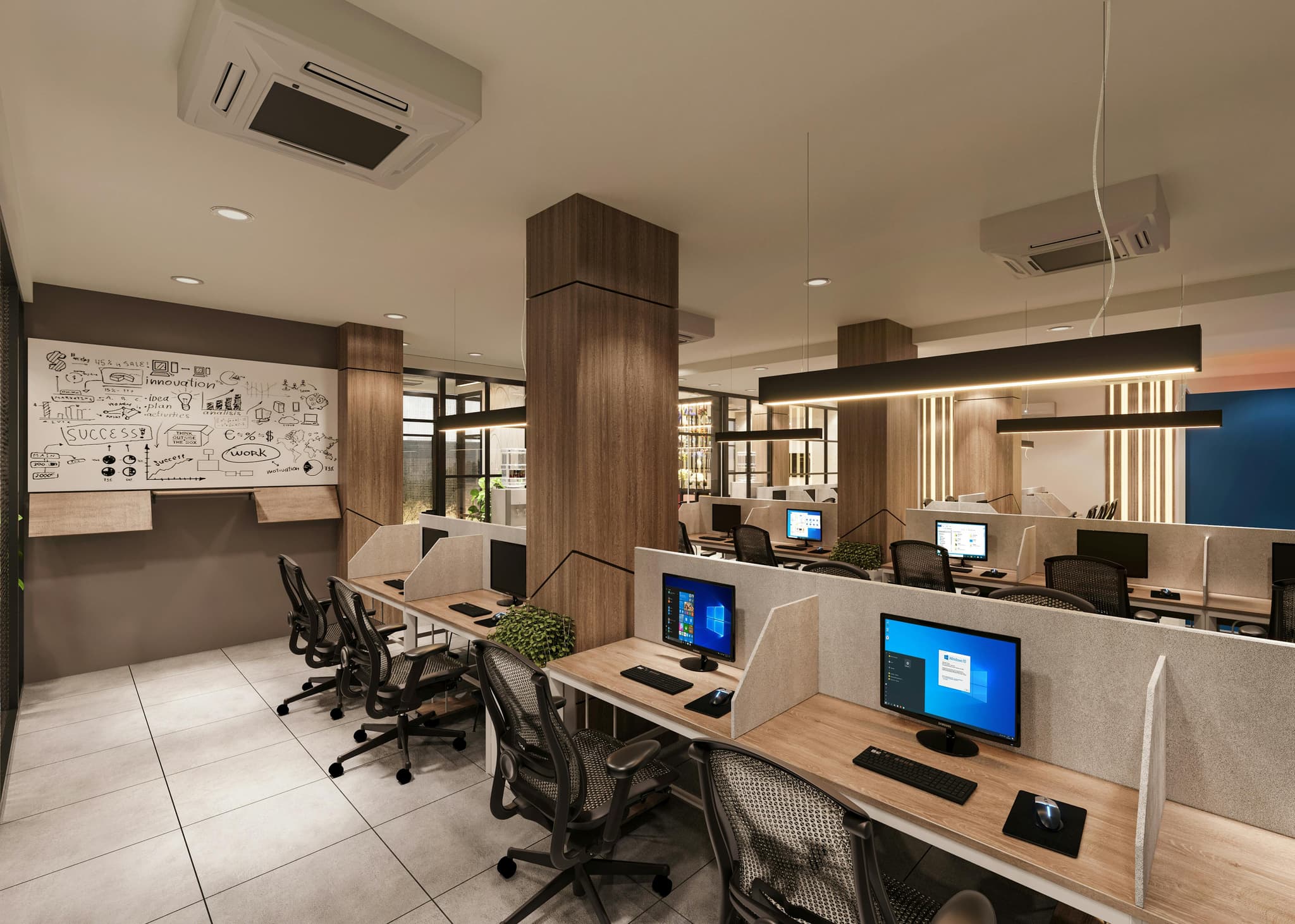
Most businesses overestimate how many desks they need. Sometimes significantly.
The "one desk per person" model made sense when everyone worked in the office five days a week. In 2026, it just means you're paying for empty space on the days your team works from home. CBRE researchers report that average space per employee has already dropped 27% since 2021 — from 292 to 205 square feet — yet many layouts and decision-makers in businesses have not caught up.
Getting your desk count right before you search for a flexible office space is one of the most useful things you can do. Overestimate, and you lock in unnecessary cost from day one. Underestimate, and your team can't find a seat on a busy Tuesday — which erodes trust in the office faster than anything else.
This guide gives you a practical framework to calculate the right number of desks for your team. It takes about fifteen minutes to work through. The maths is straightforward.
Why the Old Model Fails Hybrid Teams
A simple 1:1 ratio of desks per employee is no longer a useful calculation for hybrid office space needs. Today, you may only have 30% of your staff in the office at a given time.The shift is structural, not temporary. CBRE's 2025 data shows 62% of organisations now run desk sharing ratios above 1.5 employees per desk, and only 14% keep a traditional 1:1 setup. The industry has moved. The benchmark has changed. Businesses still operating on a 1:1 ratio are paying a premium that the data doesn't support.
Getting this number right determines whether your office feels comfortably flexible or frustratingly overcrowded. Both extremes cost you — one in rent, the other in employee experience and retention. The goal is to find the number in between.
Step 1: Identify Your Peak Occupancy — Not Your Headcount
Your headcount is the wrong starting number. Your peak occupancy — the highest number of people you'd expect in the office on any given day — is the right one.Start by tracking actual office attendance over several weeks. Most businesses find that peak occupancy sits between 50% and 70% of total headcount, typically on Tuesdays, Wednesdays, and Thursdays.
If you don't yet have attendance data, use this as your default assumption: in a standard two-to-three day hybrid model, approximately 60% of your team will be in the office on the busiest day of the week.
Example:
- Total headcount: 20 people
- Hybrid policy: 2–3 days in office per week
- Assumed peak occupancy: 60% = 12 people on the busiest day
- Starting desk requirement: 12 desks
Plan for the busiest in-office days rather than average use. If you have 100 hybrid employees and 60% typically come in on peak days, you'll need approximately 60 desks — not 100.
Step 2: Apply the Right Desk-Sharing Ratio for Your Team
Once you have your peak occupancy number, apply a desk-sharing ratio based on how your team actually works. Most organisations now target a desk-sharing ratio between 1.01 and 2.0 employees per desk.Here's how the ratios break down in practice:
1:1 — Traditional assigned seating Every person has their own desk. No sharing. Use this only if your team is fully in-office five days a week, or if roles require specialist equipment that can't be packed up daily (lab equipment, dual-monitor trading setups, specialist hardware). According to the 2025 Occupancy Intelligence Index, companies now target 1.4 to 1.8 employees per seat, with peak utilisation still below 80% — so a pure 1:1 setup is now the minority position.
1.3:1 to 1.7:1 — Moderate hybrid Best for teams working 2–3 days per week in the office. This is the most common ratio for Australian SMEs in 2026. A team of 20 people on a moderate hybrid schedule would need approximately 12–15 desks. OfficeRnD analysts and Flexos experts point to a 1:2 ratio as a practical sweet spot for most hybrid teams, delivering close to 90% desk use on the busy midweek days and around 50% on Mondays and Fridays.
2:1 to 3:1 — Flexible / hoteling Best for teams with heavy remote work and lower in-office attendance — 1 day per week or less. If your team treats the office as an occasional collaboration venue rather than a regular base, a ratio of 2:1 or higher is appropriate. A team of 20 people in this model may only need 7–10 desks.
Worked example — 20-person team, moderate hybrid (2–3 days/week):
- Headcount: 20
- Peak occupancy (60%): 12 people
- Desk-sharing ratio (1.3:1): 12 ÷ 1.3 = ~9 desks
- Recommended desk count: 10 desks (rounding up with a small buffer)
Step 3: Add a Buffer for Growth and Peak-Day Variance
Your desk count from Step 2 is based on average peak occupancy. Two adjustments are worth making before you finalise the number.Peak-day buffer: Some days will be above your average peak — company all-hands, training days, team off-sites coinciding with office access. Ratios should account for breaking points, not just day-to-day averages. Structure your office to handle occasional surges without causing space shortages that frustrate employees. A practical approach: add 10–15% to your calculated desk count as a buffer. On a 10-desk calculation, that means 11–12 desks.
Growth buffer: If your team is likely to grow over the next 12–18 months, factor in projected headcount. Adding one or two desks now is far easier than negotiating a mid-term expansion in a coworking agreement. Most flexible office operators can accommodate growth within the same building, but the suite size you sign up for sets your ceiling.
A sensible rule of thumb: add 10–20% to your final desk count if you expect meaningful headcount growth in the next 18 months. Add a 10–20% buffer to your final number. This extra space will be helpful if you have minor growth or want to accommodate future layout changes without having to relocate.
Step 4: Don't Forget the Non-Desk Space
A common mistake at this stage: calculating desks correctly but neglecting the other types of space your team needs — which then leaves you in a coworking setup where there are always enough desks but never enough meeting rooms.Hybrid teams need approximately 15–25% of total office space dedicated to meeting rooms, with a mix of sizes from small 2-person rooms for video calls up to larger 8–12-person boardrooms.
When evaluating any flexible office option, consider:
Meeting rooms. How many video calls does your team take per day? How often do you host external clients? A team of 10 with frequent client meetings and heavy video-call use needs more bookable meeting rooms than a team of 10 that mostly works independently.
Phone booths and focus pods. In open-plan hot desk environments, the absence of phone booths is one of the most common complaints. If your team regularly takes calls from the desk, check whether the space has acoustic booths or quiet zones before committing.
Collaboration zones. The hybrid office design transitions existing space to flexible desk layouts, lounge areas, and meeting rooms designed for videoconferencing. Large conference rooms are being swapped out for more sensible alternatives such as Zoom rooms, huddle rooms, phone booths, and private workspaces available on an hourly or daily basis. Many coworking operators have designed their spaces with this shift in mind — but it's worth verifying that the mix of space types suits your specific team.
The Desk Count Calculator: A Quick Reference
| Team Size | Hybrid Policy | Est. Peak Occupancy | Recommended Desks (incl. 10% buffer) |
|---|---|---|---|
| 5 people | 2–3 days/week | 3 | 3–4 desks |
| 10 people | 2–3 days/week | 6 | 7 desks |
| 20 people | 2–3 days/week | 12 | 11–13 desks |
| 20 people | 4–5 days/week | 18 | 18–20 desks |
| 30 people | 2–3 days/week | 18 | 16–20 desks |
| 50 people | 2–3 days/week | 30 | 28–33 desks |
A Note on Role Types
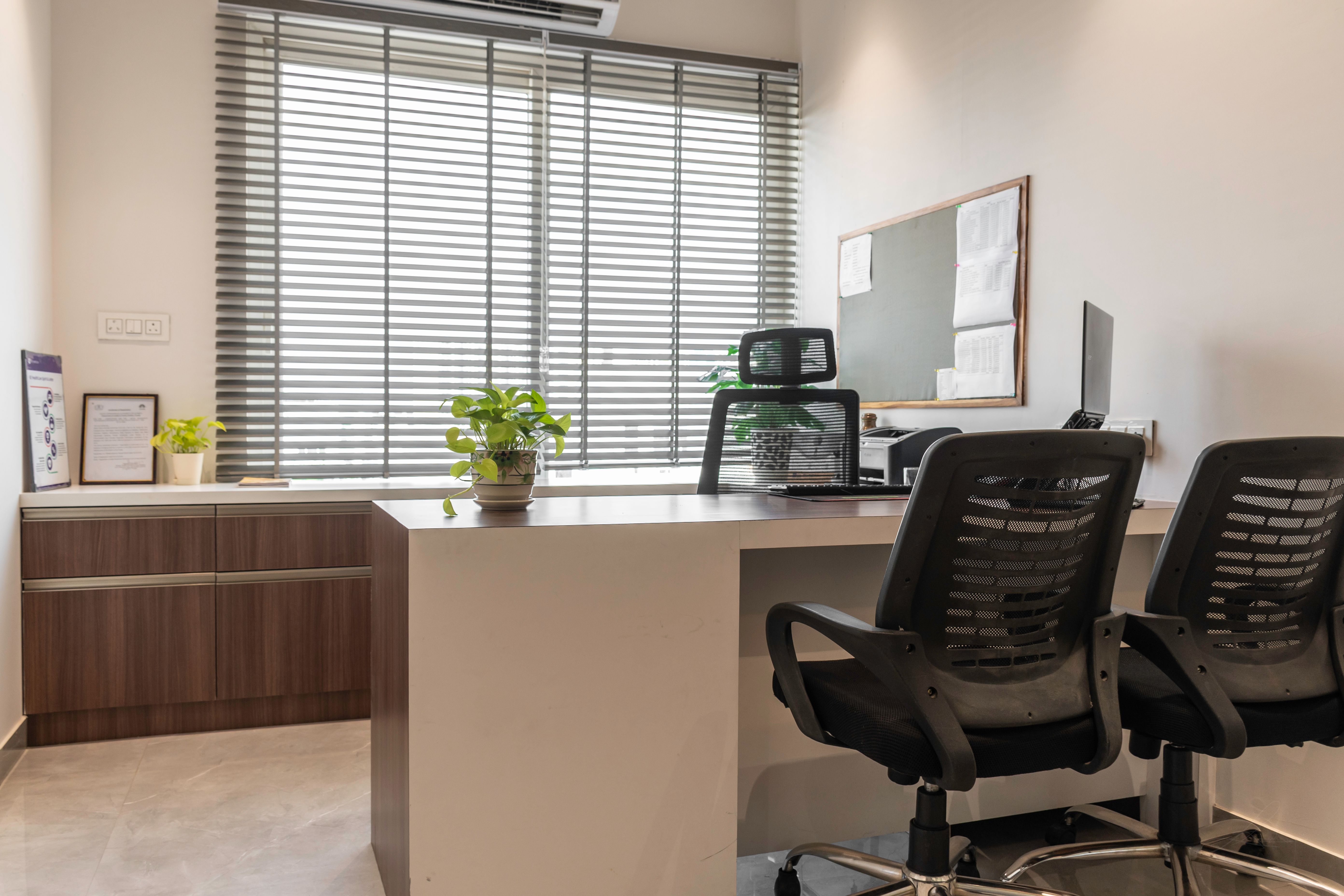
Not every member of your team needs the same workspace solution. Full-time in-office employees need a dedicated desk each. Hybrid and remote-first employees are better served by hot desking or unassigned seating.Senior staff, employees with multiple monitors or specialist equipment, and those with disabilities or health conditions that require specific workstation setups should generally retain dedicated desks. In a flexible office context, this might mean taking a private office for two or three key team members while the rest of the team uses a hot desk membership — a mixed arrangement that many operators accommodate within a single agreement.
When Your Count Changes: The Flexibility Advantage
The reason desk calculation matters differently in a flexible office than in a traditional lease is that you can change it. A coworking membership or serviced office agreement with a month-to-month or short-term structure can be adjusted as your team's attendance patterns evolve.For businesses looking for flexibility, a coworking space provider can be the ideal solution. You can easily scale your office space requirements up or down as your business evolves, without the constraints of a traditional long-term lease.
Use your initial desk count as a starting point, not a permanent decision. Most reputable operators will let you add desks without renegotiating the whole agreement, and data from your first few months of actual usage will quickly tell you whether your estimate was right.
Ready to Search with Confidence?
Now that you have a clear desk count, a search based on real numbers is far more efficient than browsing without a brief.Use OfficeFlexFinder to search flexible office space across Australia — filter by team size, desk type, city, and budget. You'll be comparing options that actually match your requirements, not the full market.
You can also explore:
- How much does coworking cost in Australia in 2026?
- Coworking vs traditional lease: the true cost for SMEs
- 10 questions to ask before signing a flexible office lease
- What is a hot desk? Everything you need to know
About OfficeFlexFinder: We help Australian businesses, freelancers, and remote workers find and compare flexible office space — from hot desks to private offices and serviced suites — across every major city and region in Australia.
Arthur Truong
Content Editor
Office space specialist helping businesses find their perfect workspace.
