
How to Onboard Remote Employees Using Coworking Spaces
Remote onboarding is harder than it looks. This guide shows Australian businesses how to use coworking spaces strategically to onboard remote employees faster, better, and with less churn.

Remote onboarding is where most distributed businesses lose new hires before they've really started.
Enboarder's 2025 data shows that 86% of new hires decide how long they'll stay with a company within the first six months. What they're assessing in that window isn't primarily pay or role scope — it's whether they feel connected to the people, the culture, and the work itself. For remote employees joining a business they've never physically entered, that connection is significantly harder to establish — and significantly easier to fail to establish — than it is for in-person hires.
Coworking spaces have become one of the most practical tools for closing that gap. Not as a replacement for a genuine remote onboarding process, but as a physical anchor for the moments when in-person interaction creates value that video calls simply cannot replicate.
This guide covers exactly how to use coworking spaces strategically in your remote onboarding process — from day one logistics to the 90-day culture integration that determines whether a remote hire stays.
Why Remote Onboarding Fails Without Physical Infrastructure
The core problem with fully virtual onboarding isn't technology — it's the absence of shared physical experience. The no meet and greets, office tours, or popping into a coworker's cubicle that characterises traditional onboarding creates natural connection. Communication barriers make it easier for messages to be missed or misunderstood, and new hires feel disconnected in ways that compound over the first weeks.For a remote employee joining a company they've never visited, the experience is abstracted in a way that makes building genuine belonging genuinely difficult. They meet their team on a screen. They receive their laptop by courier. They complete their compliance training in a virtual portal. And then they work — alone, from a room in their house — surrounded by people they've only ever seen in small rectangles.
When managers are actively involved in the onboarding process, new hires are 3.4 times more likely to describe their experience as exceptional (Gallup). Physical presence for key moments in the onboarding journey — even on an occasional basis — dramatically increases manager involvement effectiveness in ways that scheduled video calls don't replicate.
Coworking spaces solve a specific structural problem: they provide professional physical environments where new remote employees can meet colleagues, managers, and their team without requiring anyone to relocate or the company to maintain a physical office in every city where employees live.

Step 1: Allocate a Coworking Budget for Onboarding Week
The single highest-ROI application of coworking in remote onboarding is the first week. A structured onboarding intensive — bringing the new hire together with their direct manager, their immediate team, and key stakeholders they'll regularly work with — in a professional coworking space creates the relationship foundation that sustains productive remote work for months.Gable's platform data shows that 72% of coworking bookings are for team gatherings — meaning companies are already using on-demand coworking spaces to bring distributed teams together for exactly these high-impact, in-person moments.
A practical first-week onboarding schedule using coworking infrastructure:
Day 1 (in-person at a local coworking space): Manager one-on-one, team introductions, workspace tour, team lunch. The physical meeting creates the human connection that makes subsequent virtual interactions meaningful rather than transactional.
Day 2 (remote): Administrative onboarding — complete compliance documentation, review company handbooks, set up tools and access. This work doesn't require physical presence and is better done without the distraction of social obligation.
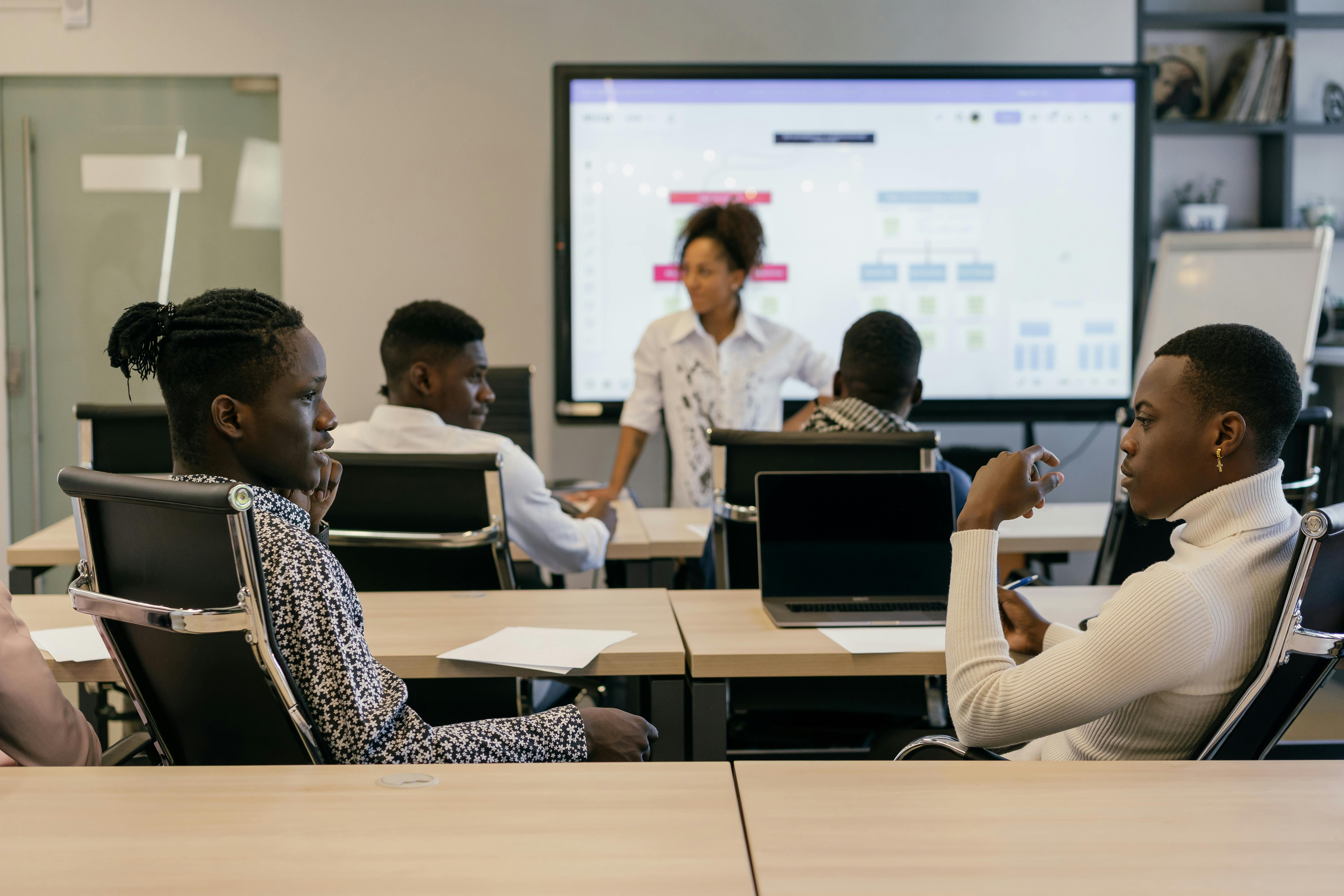
Day 3 (in-person, meeting room booking): Role-specific training session with the direct team. Meeting rooms at coworking spaces are more suitable for structured learning than open-plan coworking areas — book a 4-hour session at the team's nearest coworking space with AV infrastructure.
Day 4 (remote): Shadowing and self-directed learning. The new hire observes recorded workflows, meets stakeholders virtually, and begins their role-specific documentation.
Day 5 (optional: in-person): End-of-week review with manager. Brief but meaningful — assesses what's landed well, addresses confusion, and sets week 2 priorities.
Budget for week 1: One or two meeting room bookings at $50–$100/hour for 3–4 hours each = $150–$400. Day passes for 2–3 in-person days at $40–$60/day = $80–$180. Total onboarding week coworking cost: $230–$580 per new hire. Against the cost of poor onboarding — higher churn, re-recruitment, productivity loss — this is one of the highest-return investments in the remote onboarding process.

Step 2: Provide a Local Coworking Membership for the First 90 Days
The onboarding week creates the initial connection. The first 90 days are where that connection either deepens into genuine engagement or erodes into disengagement.For remote employees, the work-from-home environment creates specific risks during this period: isolation, under-exposure to informal company culture, and the absence of the ambient professional community that helps new hires calibrate their performance norms and develop professional confidence.
A coworking membership — even a hot desk at a local provider — gives new remote employees three things they can't get from a home office:
Structure and accountability. The social environment of a coworking space creates an external working structure for people who haven't yet developed the internal discipline that full-time remote work requires. This matters particularly in the first 90 days before habits are established.
Professional community. Coworking provides access to a local professional network that remote employees — especially those new to an area — may not have developed. The informal connections made in a coworking space often become the professional support network that sustains effective remote work over years, not just months.
A physical anchor for remote days. Many remote employees find the transition from in-office to fully remote disorientating in the early weeks. A coworking space provides the option of a professional environment on the days when home doesn't work — and reduces the isolation risk that correlates with early-tenure remote employee disengagement.
Costing this for Australian businesses: Hot desk memberships across Australia's major cities range from $350–$600/month. For a 90-day onboarding period, that's $1,050–$1,800 per new hire. Many coworking operators offer corporate accounts or multi-user plans that reduce per-member costs for businesses onboarding multiple remote employees.
For operators with national multi-city memberships — Hub Australia's Flexi National, WeWork's all-access plan, or WOTSO's network coverage — a single membership type can cover remote employees across multiple Australian cities, simplifying procurement and budget management for HR teams.
Step 3: Use Coworking Meeting Rooms for Key Milestone Moments
Beyond the initial week and ongoing membership, coworking meeting rooms are the most efficient tool for the specific moments in the first 90 days where in-person interaction has disproportionate impact:30-day check-in: An in-person session with the direct manager to review progress, address concerns, and recalibrate priorities. 90 minutes in a private meeting room at the employee's nearest coworking space is more effective than a video call for the emotional components of this conversation — the questions the new hire is hesitant to ask on video, the tone the manager can read in person but not through a screen.
60-day team integration: A half-day collaborative session bringing the remote employee together with their core working group. Workshop format — problem-solving, project planning, or a retrospective — creates the shared work experience that video-mediated collaboration doesn't replicate. Meeting room hire for a half day runs $150–$350 in most Australian capital cities.
90-day review: The formal performance and culture alignment conversation at the end of the probationary period. For distributed teams, this is often the moment where the organisation decides whether a hire is integrating well — and where the new hire decides whether they're staying. An in-person setting for this conversation, even just an afternoon at a local coworking space, signals a level of investment and respect that a video call does not.
Step 4: Build Coworking Into the Distributed Team Rhythm
The most sustainable use of coworking for remote onboarding is embedding it into your team's operating rhythm rather than treating it as an onboarding-only expense.Teams that regularly use coworking spaces for quarterly all-hands, project kick-offs, or team-building sessions create a physical meeting cadence that new remote employees can immediately join — removing the "newcomer awkwardness" that characterises ad-hoc in-person events.
If your team meets quarterly at a coworking space for a day-long planning session, a new hire who joins one month before the next session has a clear, low-stakes milestone for their first major in-person team interaction. They arrive knowing they'll meet the whole team, knowing what the agenda is, and knowing it's a regular event rather than something staged specifically for them.
This cadence also solves the cost challenge of ongoing coworking support for remote onboarding. If the company is already booking quarterly team coworking days, the incremental cost of including new hires is minimal — and the cultural integration benefit is significant.
Step 5: Match Coworking Location to the Employee's Suburb — Not Your Office
One of the most common mistakes in using coworking for remote onboarding is defaulting to the company's existing coworking arrangement — which is often in the CBD — without considering whether it's actually convenient for the new employee.If your Sydney office is in Barangaroo and your new hire lives in Parramatta, booking an onboarding session at a Barangaroo coworking space requires a 45-minute commute each way on day one. That's not the optimal first-day experience.
Most major coworking operators in Australia have multi-location networks that allow companies to book facilities across multiple sites under a single corporate account. The practical approach: confirm the new hire's suburb before booking any in-person coworking sessions, and default to a location that minimises their commute on high-intensity days like onboarding week.
OfficeFlexFinder's listings cover coworking spaces across every major suburb and region in Australia — including suburban locations that may be significantly more convenient for remote employees than CBD spaces.

Practical Checklist: Remote Onboarding with Coworking Infrastructure
Before start date:- Identify nearest quality coworking space to the new hire's home address
- Book meeting room for Day 1 manager one-on-one (2 hours)
- Book meeting room for Day 3 role-specific training session (3–4 hours)
- Set up day passes for Days 1, 3, and optionally 5
- Confirm with manager they'll be physically present for Day 1
- Day 1 in-person: manager one-on-one, team introductions, lunch
- Day 3 in-person: role training in booked meeting room
- Days 2 and 4: remote administrative and self-directed learning
- Activate hot desk membership at local coworking space for the employee's use
- Schedule 30-day in-person check-in (meeting room booking, 90 minutes)
- Schedule 60-day team workshop (half-day meeting room, team present)
- Schedule 90-day review (in-person, 2 hours)
- Include new hire in next quarterly all-hands coworking day
- Maintain hot desk membership or day pass allowance as standard benefit for remote employees
- Integrate remote employees into team's regular coworking cadence

Ready to Find the Right Coworking Infrastructure?
Whether you're onboarding one remote employee or building an HR policy for a distributed team of fifty, Australia's coworking network provides the physical infrastructure to make remote onboarding genuinely effective.Browse coworking spaces across Australia on OfficeFlexFinder — filter by city and suburb to find the right local space for your new hire's location.
You can also explore:
- Best coworking spaces in Sydney CBD
- Best flexible offices in Melbourne CBD
- Best coworking spaces in Melbourne inner suburbs
- Setting up an interstate satellite office in Australia
- How to find and book flexible office space: step-by-step
About OfficeFlexFinder: We help Australian businesses, freelancers, and remote workers find and compare flexible office space — from hot desks to private offices and serviced suites — across every major city and region in Australia.
Arthur Truong
Content Editor
Office space specialist helping businesses find their perfect workspace.
