
Setting Up an Interstate Satellite Office in Australia
Expanding into a new state? This step-by-step guide covers everything Australian businesses need to know about setting up an interstate satellite office — from choosing the workspace type to managing a distributed team.
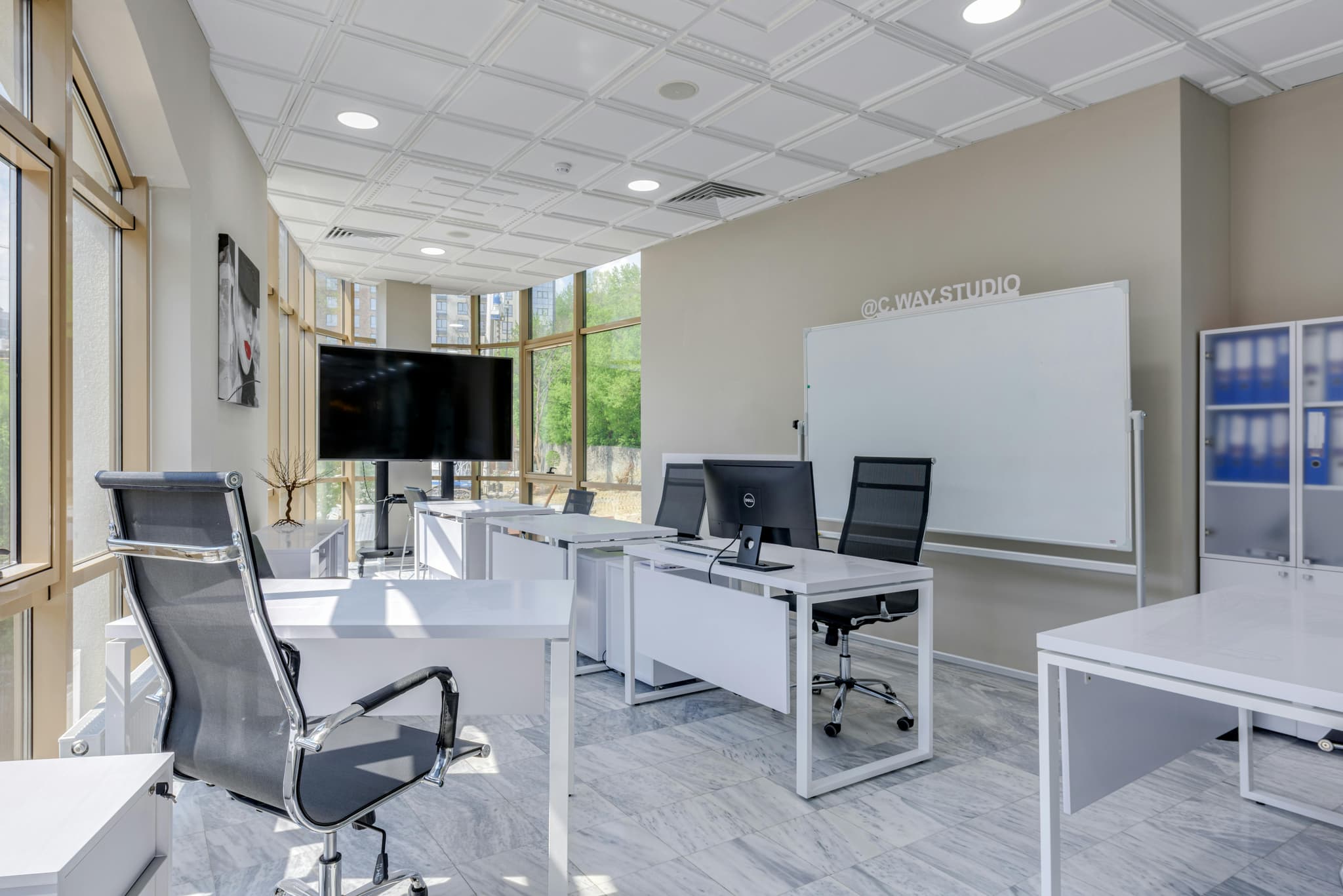
Expanding into a new state is one of the most significant growth moves an Australian business can make — and one of the most commonly overcomplicated. The instinct is to treat it like a full relocation: find a building, sign a lease, hire a fit-out company, negotiate with a commercial real estate agent for three months, and emerge on the other side with an office that cost twice what you expected and committed you to five years in a city you're still figuring out.
There's a better approach. And it starts with understanding that a satellite office doesn't need to look anything like your headquarters.
What Is a Satellite Office?
A satellite office is a smaller secondary workspace that allows a company to establish a professional presence in a new city or region without relocating the whole business. Satellite offices are smaller branches of a company located away from the main headquarters — as small as a single desk for one person, or as large as a full private suite for a team of 20. They can be set up anywhere your business needs them: major cities like Melbourne, Sydney, and Brisbane, or even regional centres where talent and opportunities exist.Businesses set up satellite offices for several distinct purposes:
- Market expansion — testing demand and building relationships in a new city before committing to full operations there
- Talent access — hiring skilled professionals in cities where they already live, rather than requiring relocation
- Client proximity — establishing a local address and presence for clients in a specific market who expect a local relationship
- Distributed team support — providing remote employees in a new city with a professional workspace rather than leaving them working from home or cafés indefinitely
- Regulatory or compliance requirements — certain industries or government contracts require a physical presence in a specific state
Step 1: Define What the Satellite Office Needs to Do
Before you choose a workspace type or shortlist a location, answer three questions that will shape every subsequent decision.Who will work from it? Is this for a single business development representative, a small sales team, a technical team, or overflow for remote employees who live in that city? Headcount — and specifically expected daily attendance — determines the desk count you need, which determines the workspace model that makes economic sense. A single person in Melbourne two days per week needs a hot desk membership, not a private office. A team of eight working full-time needs a private suite, not hot desks.
What will they do there? Open client meetings? Confidential legal or financial work? Technical collaboration requiring dual monitors and server access? Casual day-to-day remote work? The work type determines the environment. Confidential or client-facing work requires a private office or serviced suite. Independent knowledge work is fine in an open coworking environment with acoustic booths for calls.
How long will you be there? Testing a new market for six months requires a fundamentally different setup — and commitment level — than establishing a permanent interstate presence. Being honest about this upfront protects you from committing to a 3-year lease before you know whether the market will deliver the revenue to justify it.
Step 2: Choose Your Workspace Model
This is the most consequential decision in the process, and it's the one most businesses default to without considering the full range of options. There are four distinct models for an interstate satellite office, each with different cost, flexibility, and presentation profiles.Model 1: Hot Desk Membership at a Coworking Space
Best for: 1–3 people, 1–3 days per week, early-stage market testing, single employee or contractorCost: $350–$850/month per desk depending on city and operator
Commitment: Month-to-month
The simplest and most flexible entry point. Your team member(s) in the new city get access to a professional coworking space, a working address for mail, and all facilities — without any lease, fit-out cost, or management overhead. If the market doesn't develop, you exit with a month's notice.
The limitation: no dedicated permanent space, no ability to leave equipment set up, and limited sense of "team identity" at the new location. Works well for an individual business development person or a small team that doesn't need to impress clients at their desk.
Model 2: Dedicated Desk or Small Private Office at a Coworking Building
Best for: 2–10 people, 3–5 days per week, established satellite team, occasional client meetingsCost: $500–$1,100/desk/month in CBD locations
Commitment: 3–12 months (flexible)
A private office within a coworking building gives your satellite team a permanent, branded space — a door to close, equipment to leave set up, and a professional environment for client meetings — while the building infrastructure (reception, cleaning, meeting rooms, IT) is managed by the operator. The front-end work of setting up and operating an office is already done for you. You don't have to spend time on lease negotiations, property or maintenance repairs.
This is the model that best replicates the feel of a "real office" for an interstate team without the capital cost and management overhead of a standalone lease. It's also the model with the most flexibility for scaling: add desks as the team grows, reduce them if the market shrinks, without restructuring an entire lease agreement.

Model 3: Serviced Office Suite
Best for: 5–30 people, professional services or client-facing businesses, enterprises establishing a formal state presenceCost: $600–$1,100+/desk/month all-inclusive in major CBDs
Commitment: 1–12 months (flexible terms)
A serviced office is a self-contained, fully managed private suite within a professionally run building. Furniture, IT, reception, cleaning, and meeting rooms are all included. Operators like Servcorp, Regus, Hub Australia, The Executive Centre, and Christie Spaces operate across every major Australian city and most state capitals, allowing businesses to maintain a consistent quality of environment regardless of which city they're operating in.
For businesses that need to project substance in a new market — to attract senior hires, build relationships with institutional clients, or meet regulatory requirements for a physical state presence — a serviced office in a credible CBD building delivers that substance without a 3-year lease or $300,000 fit-out spend.

Model 4: Traditional Commercial Lease
Best for: 30+ people, stable long-term operations, custom infrastructure requirementsCost: $500–$1,000+/sqm/year (CBD) plus fit-out, outgoings, and management
Commitment: 3–10 years
A traditional lease makes sense when your interstate operations are large, stable, and long-term enough that the economics outperform flexible alternatives on a total-cost-of-occupancy basis. At under 30 people or under 3 years of planned occupancy, flexible models almost always win on total cost when fit-out, make-good, and management overhead are factored in.
For most businesses setting up a satellite office in a new state for the first time, a traditional lease is the wrong starting point. Start with Models 1–3 and upgrade to a lease once you've validated the market and understand what you actually need.
Step 3: Choose the Right City and Location
City selection is sometimes dictated by the business objective — if your target clients are in Brisbane, you need to be in Brisbane. If you're following a key hire, you go where they are. But if there's genuine flexibility, the national flexible office market provides useful anchors.Sydney: Australia's largest professional services, financial services, and technology market. The most expensive coworking and serviced office market in the country — CBD hot desks from $550/month, private offices from $800/desk. Worth it for businesses where a Sydney CBD address directly affects commercial credibility. Inner suburbs like North Sydney and Parramatta offer 25–35% savings with strong connectivity.
Melbourne: The second-largest market and 10–15% cheaper than Sydney on like-for-like space. Strong across professional services, technology, and creative industries. The inner suburb premium — Hawthorn, Richmond, Fitzroy — is particularly well-developed and offers quality alternatives to CBD pricing.
Brisbane: The most affordable major-market option, with median desk rates around $440/month and strong growth in flexible office supply. A strong choice for businesses entering the Queensland market or targeting resources, construction, and agriculture-adjacent professional services.
Perth: Suited to businesses in mining, resources, energy, and related professional services. The CBD median is $799/desk/month — a 25% discount to Sydney — and West Perth offers further savings from $250–$537/desk.
Adelaide: Often overlooked as a satellite office destination, Adelaide offers some of the most accessible pricing in any Australian capital ($400–$500/desk/month in the CBD) and a concentrated, relationship-driven business community.
Within each city, the choice between CBD and inner suburbs follows a consistent pattern: CBD addresses carry greater institutional credibility for client-facing businesses; inner suburbs offer the same operational quality at meaningfully lower cost for businesses where daily commute practicality matters more than address prestige.

Step 4: Handle the Practical Considerations
Once workspace model and location are settled, several operational matters need to be addressed before the satellite office is functional.Business registration: If your satellite office will be your ASIC registered office for that state, confirm the operator explicitly permits this in writing — it is not automatic with all workspace agreements. A virtual office plan, a serviced office suite, or a coworking space with business address services can all satisfy this requirement, but written permission is required.
Employment and payroll: Employees based interstate are subject to the employment laws of the state in which they work, not the state of your headquarters. Confirm with your payroll provider that interstate employees are correctly set up for payroll tax, WorkCover, and state-specific entitlements. Payroll tax in particular has state-specific thresholds and rates that differ between jurisdictions.
IT and connectivity: For most businesses using serviced offices or coworking spaces, enterprise-grade internet is bundled into the membership. For businesses with specific IT requirements — VLAN, secure network access, dedicated bandwidth — confirm these are available before signing. If the satellite team needs access to your headquarters' internal systems, your IT team will need to configure VPN access or equivalent remote connectivity before the team member starts working.
Cultural integration: The most underestimated challenge of a satellite office is not logistical — it's cultural. Remote employees, with no shared physical space with colleagues, can feel disconnected from the company culture over time. Leading organisations are adapting workforce management strategies to incorporate a mix of work from home and flexible satellite offices that provide space for teams to collaborate, without requiring staff to commute to a head office that may not be accessible from their city. Regular all-team video calls, periodic interstate team visits, and deliberate inclusion of satellite team members in company communications and decisions are not optional extras — they're operational requirements.
Step 5: Start Lean, Then Scale
The most common mistake in setting up a satellite office is starting too large. A Sydney-based business establishing its first Melbourne presence often calculates the "right" team size, signs up for a 10-desk private office, and then spends the first six months with three people in a space designed for ten.Start with the minimum viable presence: the desk count you actually need on day one, in a workspace that allows you to scale up quickly when the business warrants it. Flexible workspace — by design — accommodates this. Most operators can add desks to an existing agreement within days; a traditional lease cannot.
A sensible progression: month-to-month hot desk or dedicated desk → small private office on a 6-month term → larger private suite or serviced floor on a 12-month term → traditional lease when the team and operations are large and stable enough to justify it.
Each step is a deliberate decision based on evidence about how the market is performing, not an upfront bet on what you expect it to become.
Ready to Find Your Satellite Office?
OfficeFlexFinder lists flexible workspace across every major city and state in Australia — from single hot desks to full private office suites — with verified pricing, transparent inclusions, and direct tour booking.Browse office space across Australia to compare options in your target city, or explore by state:
- Office space in Sydney
- Office space in Melbourne
- Office space in Brisbane
- Office space in Perth
- Office space in Adelaide
- How much does coworking cost in Australia in 2026?
- Serviced office vs coworking: which is right for your team?
- 10 questions to ask before signing a flexible office lease
- How many desks does your team actually need?
About OfficeFlexFinder: We help Australian businesses, freelancers, and remote workers find and compare flexible office space — from hot desks to private offices and serviced suites — across every major city and region in Australia.
Arthur Truong
Content Editor
Office space specialist helping businesses find their perfect workspace.
