
Perth's Office Market in 2026: What's Driving Demand Beyond the CBD
Perth's suburban office markets are tightening while the CBD vacancy sits near record highs. Here's the data on what's actually driving office demand across WA in 2026.

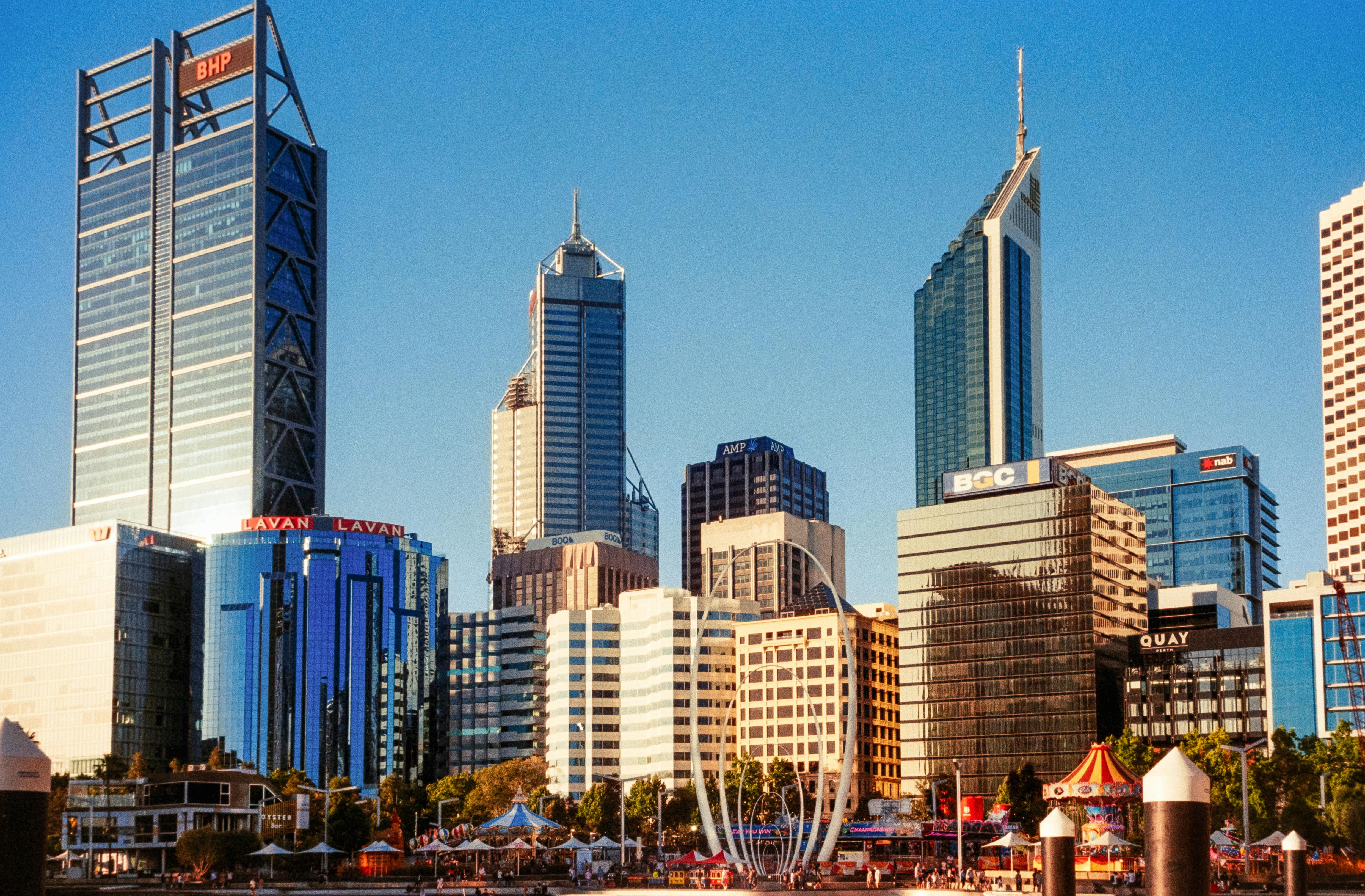
Perth's office market in 2026 presents a paradox that most commentary hasn't caught up with yet. The CBD vacancy rate is among the highest of any Australian capital city. And yet Perth's commercial property market is outperforming expectations, with suburban precincts tightening, rents rising in select locations, and the city's broader economy underpinned by one of the strongest mining cycles in a generation.
Understanding where demand is actually concentrating — and why — tells a more specific story than any single vacancy figure can.
The CBD Vacancy Headline Obscures More Than It Reveals
Start with the number that gets the most attention. Perth CBD vacancy rose from 15.1% in January 2025 to 17% by June 2025, according to the Property Council of Australia, making it the second-highest vacancy rate of all Australian capitals after Melbourne. On its face, that's a weak market.But the headline figure conflates two very different stories happening within the same precinct. Perth's office market continues to benefit from steady occupier demand and one of the most constrained supply pipelines nationally, with prime rental growth remaining positive through Q2 2026 and incentives broadly stable across all grades. The gap between those two statements — high vacancy and rising prime rents — is explained by what the vacancy is actually composed of.
The vast majority of vacant Perth CBD space is older secondary-grade stock that modern occupiers don't want. Demand remains concentrated in well-located prime assets, supporting rental growth and further widening the performance gap between prime and secondary buildings. A grade A building in the CBD's financial core can command firm rents and receive competitive enquiry; a B-grade building on a secondary street is sitting largely empty. The overall vacancy rate averages across both, and the average lies.
The February 2026 PCA Perth Office Market Update confirmed WA's strong economic and demographic growth with the mining sector providing most of the tenant demand. Western Australia's economy is being driven by commodity export strength, infrastructure investment and population growth — and those dynamics show up in office demand, particularly from resource-sector businesses and the professional services firms that support them.
Suburban Perth Is Where the Supply Crunch Is Actually Happening
While the CBD vacancy figure dominates coverage, a genuinely interesting story has been developing in Perth's suburban office markets — one that matters considerably more for the businesses that make up the bulk of Perth's flexible office tenants.There is less than 30,000 sqm of A-grade space available across all suburban Perth, with 2025 new supply completions forecast to be 57.8% lower than 2024 and around 80% lower than the 10-year new supply average for suburban office markets. Nine Perth suburbs have vacancy rates below 5%. Cockburn Central has effectively zero available office space at all.
This tightening in suburban markets isn't happening uniformly — there are wide variances in performance across suburban Perth, with some suburbs below 5% vacancy and others above 20%. But the direction of travel in the better-located suburban precincts is clear: less stock, firmer rents, and a supply pipeline that is declining rather than growing.
What's particularly interesting is where the heat is. While the Inner sub-region recorded the most sales, there is a distinct surge in demand for suburban offices specifically in the 150–250sqm range, as businesses look for flexibility and proximity to where their staff live.
That 150–250sqm range is significant. It's the size bracket that covers most of the flexible and serviced office market — teams of 10–25 people in a private suite. These aren't large enterprise requirements; they're the SME and scale-up businesses that form the core demand for the flexible office sector.
The Three Drivers Behind Suburban Demand
The suburban demand story isn't just about the CBD's relative weakness — there are genuine positive drivers pulling businesses toward Perth's inner and middle-ring suburbs.1. Staff Proximity
The impact of working near home is evident in the performance of near-city versus fringe suburban markets. Perth's residential geography means that for many businesses, an office 5–10km from the CBD is closer to where staff actually live than the CBD itself. Businesses that track staff commute data and adjust their location accordingly are finding that suburban bases genuinely improve attendance and retention in ways that a pure pricing comparison doesn't capture.2. Affordability and Fitout Quality
Affordability has been a key driver of suburban take-up, with average rent across suburban office markets down 6.5% compared to 2019, and only in the last 12–18 months have top asking rents re-surpassed $400 per sqm in suburban office markets. For SMEs that need a genuinely professional space but can't justify CBD pricing, the combination of lower asking rents and recently refurbished suburban buildings has created a value proposition that didn't exist as clearly five or ten years ago.A-grade CBD towers have elevated vacancy but fitout-ready space with strong end-of-trip facilities is leasing well — meaning the premium is increasingly concentrating in quality of fitout rather than location prestige alone. Well-specified suburban buildings are capturing demand that older CBD secondary stock can't compete for.
3. Owner-Occupier Purchasing Activity
Owner-occupiers are purchasing office units in locations such as Subiaco, Osborne Park and Mount Hawthorn, while demand for medical and professional strata suites continues to rise. This purchasing trend is a signal of long-term confidence in suburban precinct values specifically — businesses don't buy strata office units in locations they're uncertain about. The Subiaco and Mount Hawthorn activity in particular reflects a view that these precincts will tighten further rather than soften.
The Flight to Quality Theme Running Through Both Markets
One pattern holds consistently across both CBD and suburban Perth: flight to quality. The best performing buildings are A-grade buildings — across both the CBD and suburban markets, the premium stock is absorbing demand that secondary buildings can't attract regardless of price.Perth's office property sector in 2026 is positive, and the flight to quality continues. This creates a specific dynamic for businesses searching for flexible office space: the building grade and fitout quality matter considerably more in the current market than they did when demand was more evenly spread across all stock tiers.
In practice, this means: a well-fitted A-grade suburban building at $500 per desk will typically attract more competitive enquiry and have less available inventory than a poorly maintained B-grade CBD building at $400 per desk. The nominal saving on the B-grade option comes with real costs in fitout quality, building amenity and the difficulty of attracting staff who expect a certain standard of workplace.
What the Flexible Office Sector Specifically Shows
The Rubberdesk Q1 2026 data for Perth adds granularity to the broader commercial property picture. Perth CBD's flexible office median sits at $799 per desk — a premium tier in the context of the national market, but one that reflects demand concentration in the CBD's prime-stock buildings rather than the high-vacancy secondary layer. Perth's coworking median of $463–$480 per desk reflects the accessible entry point that the flexible sector specifically offers: a way to access quality buildings without the traditional lease commitment that secondary-stock landlords increasingly can't compete with.The private office market in Perth continues to dominate flexible supply — 90% of flexible space rented in Perth is private offices, with 86% of all listings covering teams of fewer than 10 people. This skew toward small private offices reflects exactly the 150–250sqm demand surge in suburban markets noted above, and suggests the flexible sector is well positioned to capture the small-team suburban demand that the traditional leasing market is less set up to serve.
Real-World Example
A 7-person specialist environmental consultancy reentered the office market in 2025 after two years of fully remote working. Their first instinct was to look at the CBD, where vacancy was high and they expected negotiating power. What they found was that the available CBD stock at their budget was older secondary-grade buildings with poor end-of-trip facilities and dated fitouts — exactly the secondary stock the market has been moving away from. Their broker pointed them toward Subiaco, where strata office availability was tighter but A-grade fitout quality was considerably better at a comparable per-desk rate. They signed a 12-month serviced office arrangement in Subiaco, primarily because the building quality was better for their team and their professional clients than anything they'd seen in the secondary CBD market.
What This Means for Your Business
Perth's office market in 2026 rewards businesses that go beyond the CBD vacancy headline and look at where quality stock is actually available.Don't treat high CBD vacancy as a green light for any CBD building. The vacancy is concentrated in secondary stock that most growing businesses don't want. The prime CBD buildings that businesses do want are performing better than the overall figure suggests.
Act quickly in suburban precincts with tight vacancy. Less than 30,000sqm of A-grade space is available across all suburban Perth, with the supply pipeline declining. If a well-specified suburban building at the right location and size is available, the window for decision-making is shorter than the overall market might suggest.
Match your budget to building grade, not just location. In the current market, the quality of fitout and end-of-trip facilities does more work in attracting and retaining staff than the prestige of the address. A well-fitted Subiaco or East Perth building at a suburban rate may deliver better day-to-day outcomes than a cheaper secondary-grade CBD building at a CBD location.

Explore Perth Office Space Now
Whether you're weighing the CBD against a suburban alternative, or comparing specific Perth precincts, the right starting point is real, current listings rather than market headlines.Browse office space across Perth on OfficeFlexFinder, with verified pricing and transparent inclusions across the CBD and every major suburban precinct.
You can also explore:
- Office space in East Perth
- Serviced offices in Perth CBD
- Coworking space at Brookfield Place Perth
- Coworking space at QV1 Perth
- How many Perth precincts does your business actually need to compare?
- Serviced office cost in East Perth: 2026 price guide
- Serviced offices in Perth CBD vs West Perth compared
- Is the suburban coworking boom real, or just cheaper CBD space?
About OfficeFlexFinder: We help Australian businesses, freelancers, and remote workers find and compare flexible office space — from hot desks to private offices and serviced suites — across every major city and region in Australia.
Arthur Truong
Content Editor
Office space specialist helping businesses find their perfect workspace.
