
Flexible Workspace Trends: What Operators Are Building in 2026
What are Australia's flexible workspace operators investing in right now? This report covers the six product and design trends reshaping the coworking market in 2026 — with data and real examples.
The flexible workspace industry has graduated from disruption to maturity. The question operators faced in 2020 was whether the model would survive. The question in 2026 is something entirely different: how do you differentiate in a market where the baseline product — fast internet, furnished desks, clean kitchens — is assumed?
The answer, across Australian and global operators, is the same: by building something the average space doesn't have. This report maps the six product and design trends that are driving capital investment and membership growth across Australia's flexible workspace market in 2026.
The Context: A Market That Has Matured and Stabilised
Flexible workspace in Australia is no longer experimental. Flexible Workspace Australia's 2026 industry report is unambiguous: co-working is no longer a phenomenon or fad but an established and expected way of working. Desk rates have trended higher, vacant floorspace has tightened, and operator sentiment is overwhelmingly positive.The statistics from Allwork.Space's December 2025 global industry report set the scene:
- Around 70% of coworking members now prioritise collaboration-friendly spaces over traditional private offices
- 46% of operators have implemented sustainability initiatives — up from a negligible base five years ago
- AI-driven personalisation and occupancy optimisation can increase operator revenue by more than 50%
- Desk-sharing is present in 61% of flexible offices, creating real-time data needs that are driving technology investment
- Management agreements and mixed-use developments are strengthening operator resilience globally
Trend 1: Wellness Infrastructure Is Now a Baseline Requirement
The fastest-moving investment category in Australian flexible workspace over the past 18 months is wellness. What was a differentiating amenity in 2022 — a meditation room, a wellness studio, shower facilities — is now a baseline expectation at the premium end of the market, and a competitive necessity for mid-market operators who want to retain corporate members.The evidence is on the supply side. Hub Australia's national portfolio now includes fitness facilities, wellness rooms, parent rooms, and end-of-trip infrastructure as standard across its CBD locations — not as premium add-ons, but as core product inclusions. Servcorp's Barangaroo location features 150 lockers, bike parking, bike repair zone, charging areas, showers, and towel service. WeWork's major Australian locations have dedicated wellness rooms as standard.
The driver is corporate expectation. As enterprise clients have become the most important growth segment for premium operators, the amenity standards they require have converged with hospitality-grade expectations. A corporate team evaluating a serviced office suite in 2026 will ask about showers, bike storage, and wellness facilities as a matter of course — the same way they would ask about internet speed and meeting room AV.
For operators building new spaces or refitting existing ones, wellness infrastructure is now a prerequisite rather than a differentiator. The differentiation is in the quality and specificity of the offering — parent rooms versus generic wellness rooms, biophilic design versus token indoor plants, spa-grade shower facilities versus functional end-of-trip changerooms.
Trend 2: Niche Specialisation Over General-Purpose Coworking
One of the most significant structural shifts in 2026 is the move from general-purpose coworking to sector-specific hubs. Operators that positioned themselves as spaces for everyone are increasingly competing against operators that have positioned themselves as the obvious choice for a specific professional community.In Australia, this specialisation is most visible at the startup and technology end of the market: Fishburners for high-impact tech startups, Stone & Chalk for fintech and technology companies, Tank Stream Labs for startups and scale-ups in the Barangaroo ecosystem, River City Labs for Queensland's innovation community, and Melbourne Connect for the University of Melbourne's academic-commercial interface.
The global trend data is reinforcing this direction. Operators with strong community, hospitality-led service, and thoughtful design consistently outperform those competing on price and availability alone. Niche spaces succeed because the community value compounds: a fintech startup in a fintech-focused coworking hub has access to investor networks, peer founders, and potential hires in a way that a general-purpose coworking member does not.
The practical implication for operators: generic coworking is increasingly a commodity product competing on price. Sector-specific or community-specific coworking is a differentiated product competing on value. Australian operators that have committed to a community positioning — rather than deferring to general availability — are seeing stronger occupancy and higher member retention as a result.
For workspace users, this trend is good news: the ability to find a coworking community aligned to your industry, rather than one that's deliberately industry-agnostic, is genuinely improving.

Trend 3: Private Suites Are Driving Revenue Growth — So Operators Are Building More
The product mix of Australian flexible workspace has shifted decisively toward private office suites, and operators are building their supply accordingly.Private office suites now account for 80% of the flexible workspace inventory globally — up from a minority position at the height of the open-plan coworking era. Private Office Occupancy rose to 71.3% in Q2 2025 according to the OfficeRnD FlexIndex — climbing steadily throughout 2025 and outpacing growth in open desk occupancy. Rubberdesk's Q3 2025 market data shows operators actively carving up larger enterprise suites to create small-team inventory, with 1–4 person offices increasing supply by 14% and 5–10 person spaces by 10%.
For operators, the business case is straightforward: private suites generate approximately 60% of total coworking operator revenue despite taking up less than half the floor space. The revenue-per-square-metre profile of a private suite consistently outperforms the equivalent hot desk area.
The design response: new flexible workspace developments in Australia are allocating meaningfully more floor area to enclosed office suites than they did five years ago, while retaining open-plan areas for community programming, casual hot desking, and the visible activity that gives coworking buildings their energy. The best-performing spaces are not moving away from open-plan entirely — they are using open-plan as the community infrastructure that makes private suites worth occupying, rather than as the primary product.

Trend 4: Smart Technology Is Becoming Operational Infrastructure
In 2026, the technology layer of a coworking space has graduated from "nice to have" to operational necessity. Seamless booking systems, dependable connectivity, and technology that supports virtual collaboration are now baseline expectations. On the operational side, coworking operators are using data and smart systems to better understand how space is used and how to optimize it.The specific technologies Australian operators are investing in:
Desk booking and room reservation systems. App-based booking for desks, meeting rooms, and facilities is now standard at all major Australian operators. The best implementations allow team members to see real-time availability, coordinate seating with colleagues, and book facilities without contacting a community manager.
Occupancy sensing and space analytics. Sensors tracking actual desk and room utilisation — not just booking data — are increasingly common in premium Australian spaces. This data allows operators to adjust their space mix dynamically, identify underutilised inventory, and price high-demand periods at premium rates. AI-driven personalisation and occupancy optimisation can increase operator revenue by more than 50%, according to Allwork.Space's 2025 analysis.
AI-assisted operational management. Workspace management software, automated billing, and dynamic pricing are enabling meaningful efficiency gains for operators. The operational overhead of running a large coworking space — managing memberships, billing, access systems, facilities requests — has been significantly reduced by software platforms that automate routine administrative tasks.
Smart building systems. Automated HVAC control, occupancy-based lighting, and building management systems that respond to real-time usage patterns are being installed in new developments and retrofitted into major existing locations. These systems reduce energy costs, improve member comfort, and contribute to operators' sustainability credentials.
For workspace users, this technology investment produces a materially better day-to-day experience: guaranteed desk availability through booking systems, reliably comfortable environments through smart climate control, and friction-free access through app-based entry.
Trend 5: Sustainability Has Moved From Marketing to Operations
The sustainability story in Australian flexible workspace has evolved from green marketing to genuine operational commitment — driven partly by corporate tenant requirements and partly by the landlord partnerships that are increasingly defining how premium flexible workspace is developed.46% of operators have implemented sustainability initiatives — a figure that represents meaningful progress but also suggests the majority of the market has not yet made this a strategic priority. The operators that have moved furthest are those in the Barangaroo precinct (purpose-built as carbon-neutral, water-positive, and zero-waste) and those aligned with NABERS or Green Star building systems.
The corporate driver is material. Enterprise clients — particularly large professional services firms, financial institutions, and technology companies — now include sustainability credentials in their workspace supplier assessment criteria. A corporate occupier that has committed to net-zero operations by 2030 will face internal pressure to ensure their coworking space aligns with that commitment.
The practical elements that operators are investing in: NABERS-rated building tenancies, LED lighting systems, composting and waste separation programmes, EV charging for car park facilities, solar installations where building structures permit, and reporting infrastructure that allows corporate clients to include their workspace's carbon footprint in their own ESG reporting.
For Australian operators in older commercial buildings without green credentials, this trend creates a competitive challenge. The lease and fit-out cycle for commercial buildings is long — repositioning an older asset's sustainability credentials requires either significant capital investment or the constraint of a building that limits operator competitiveness in enterprise tender processes.
Trend 6: Landlord Partnerships Are Reshaping How Flex Space Gets Built
The most structural change in how Australian flexible workspace is developed is the shift from operator-as-tenant to operator-as-partner. Forward-thinking landlords are partnering with experienced operators who understand hospitality, member experience, and revenue optimisation. White-label flex, management agreements, and performance-based partnerships are replacing traditional sublease models. Buildings that win aren't just offering space — they're offering solutions.In Australia, this shift is evidenced by a series of landmark transactions. The Work Project's joint venture with Dexus — Australia's first institutional landlord-operator JV in premium coworking — established the model in February 2024. CBRE has noted that landlords are increasingly exploring flexible leasing models to unlock underutilised space, viewing flexible workspace as an anchor use case rather than a secondary tenancy.
For operators, management agreement models reduce balance sheet risk by eliminating the need to take on a primary lease — the operator provides expertise and brand; the landlord provides the building and capital. For landlords, management agreements introduce operators with proven occupancy and revenue track records into buildings that were previously difficult to let on conventional terms.
The practical result: new flexible workspace supply in Australia's major CBDs is increasingly appearing in premium Grade A buildings — the addresses that corporate tenants want — rather than in secondary stock. This directly addresses the historical criticism that flexible workspace options were concentrated in older buildings while premium addresses remained inaccessible to flexible workspace users.
What These Trends Mean for Businesses Choosing a Flexible Office
The six trends above share a common direction: the best flexible offices in 2026 are being built around what members actually need — wellness, community alignment, privacy, operational technology, sustainability, and prestige address access — rather than around what was cheapest to construct or easiest to fill.For businesses choosing a flexible office in 2026, these trends translate into specific evaluation criteria:
Wellness infrastructure is worth assessing during your tour — not just whether it exists, but whether the quality matches your team's expectations. Showers matter if your team cycles. Parent rooms matter if your team has young children. A wellness room matters if your team works long hours.
Community specialisation is worth asking about directly. What industries make up most of the membership? Does the community actively support cross-member collaboration? Is there a member network, and does it genuinely produce professional connections?
Private suite availability — and the design quality of private suites — is worth prioritising if your team is 3 or more people who need daily privacy. The market has moved; the supply of well-designed small private offices has improved significantly in the past 18 months.
Technology infrastructure — specifically booking systems and occupancy data — is a reasonable thing to ask about in a tour. Can you book a desk in advance? How does the operator know if rooms are available?
Sustainability credentials are increasingly relevant for corporate teams with ESG reporting obligations. Ask whether the building has a NABERS rating and whether the operator can provide carbon footprint data for your membership.
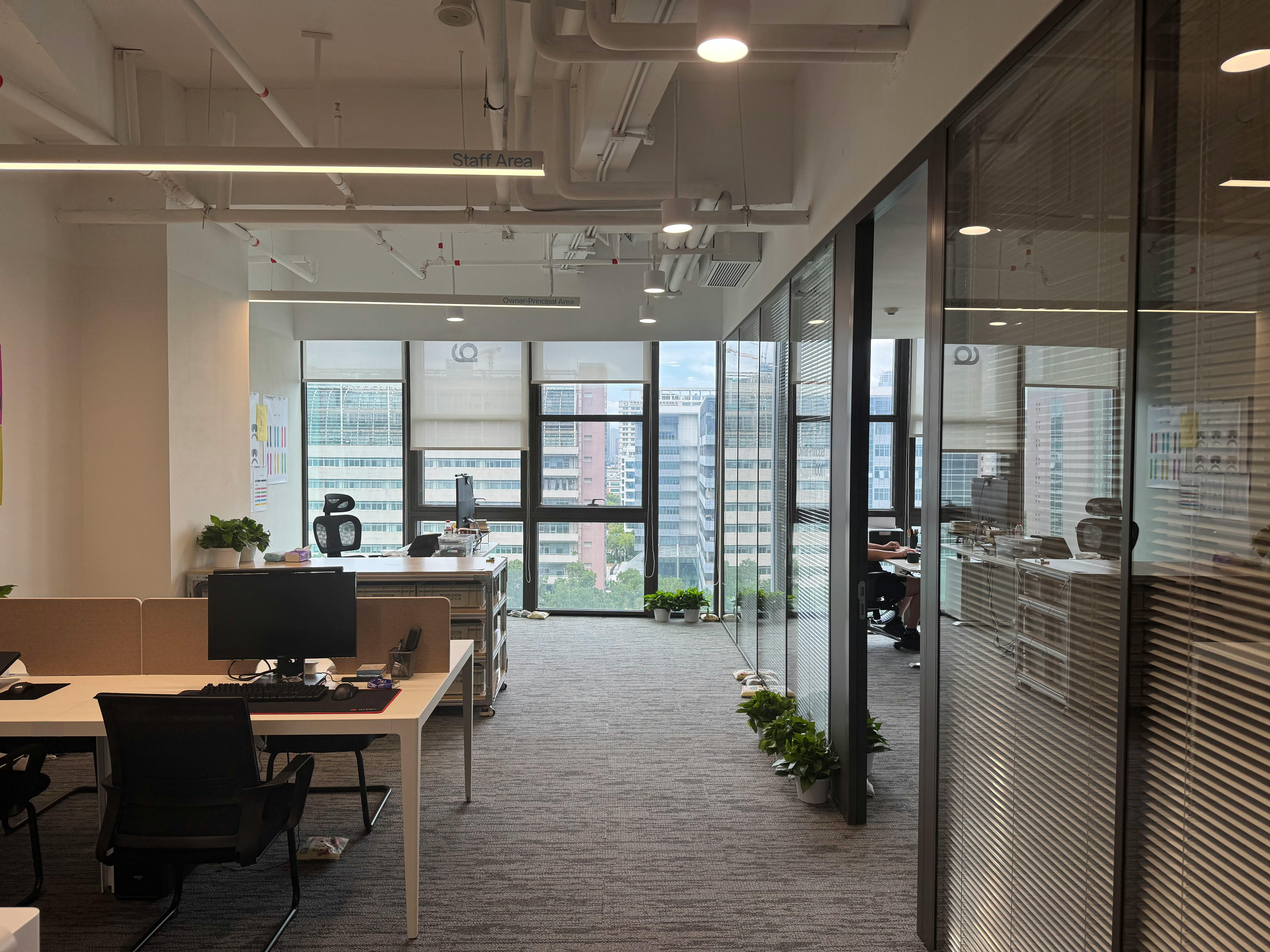
Ready to Find a Space Built for 2026?
Australia's flexible workspace operators are investing significantly in the product. The gap between a well-run, modern flexible office and a dated coworking space has never been wider — and knowing what to look for makes the difference between an informed choice and an expensive mistake.Browse office space and coworking across Australia on OfficeFlexFinder — verified listings with current pricing, transparent inclusions, and direct tour booking across every major city and region.
You can also explore:
- The state of flexible office space in Australia: 2026 report
- Hybrid work in 2026: what office do hybrid teams need?
- Why enterprise teams are switching to flex space in 2026
- The rise of suburban coworking: why businesses are relocating
- What to look for on a coworking space tour: checklist
About OfficeFlexFinder: We help Australian businesses, freelancers, and remote workers find and compare flexible office space — from hot desks to private offices and serviced suites — across every major city and region in Australia.
Arthur Truong
Content Editor
Office space specialist helping businesses find their perfect workspace.
