
Coworking Spaces vs Working From Home: The Real Trade-Offs
Home office or coworking space? This guide examines the real trade-offs — on productivity, cost, wellbeing, and career — with Australian data and no promotional spin.

More than 6.7 million Australians now work from home at least some of the time — a number that has held firm through multiple return-to-office pushes and the full normalisation of hybrid work. Working from home isn't going away. But neither is the coworking sector, which has grown from AUD $270 million in 2020 to over AUD $537 million in 2025, with occupancy rates now consistently above 78%.
Both models are growing simultaneously. That's not contradiction — it's the market sorting itself into the right tool for the right person. The question isn't "which is better" in the abstract. It's which is better for the specific way you work, the stage your business is at, and the realities of your home and professional environment.
This guide examines the trade-offs honestly — on productivity, cost, isolation, health, and career progression — with data rather than preferences.
The Australian Context: What the Numbers Say About WFH in 2026
The scale of home working in Australia in 2026 is striking. Roy Morgan's research found that nearly 70% of Sydney CBD workers work from home at least some of the time — the highest rate of any Australian capital city — followed by Melbourne CBD at 65% and Canberra at 61%. Finance and insurance leads all industries with 66% of workers working from home at least some of the time.The Grattan Institute's analysis, updated May 2026, is direct: hybrid working models do not weigh on productivity — although full-time remote work can reduce it. That nuance matters. The question for most Australians isn't "office or home full-time." It's how to calibrate the mix.
On average, Australians now work from home approximately 1.27 days per week — down from 1.6 days at the post-pandemic peak, but well above the pre-2020 baseline of near-zero. The return to office has happened, but it is partial. The hybrid model is the settled norm.
Within that norm, a growing segment of professionals is adding a third option: coworking. Not as a replacement for home working, but as a supplement — a professional environment on the days when home doesn't work, and the company's office either doesn't exist or is impractical to reach.

Where Working From Home Genuinely Wins
Before the coworking case, intellectual honesty requires acknowledging the genuine advantages of working from home — because they are real, well-documented, and explain why 6.7 million Australians have chosen it.Commute elimination
This is the most consistently and most significantly valued benefit of home working. The average Australian CBD commute is 66 minutes return per day. At five days per week, that's 5.5 hours per week — nearly a full working day — spent commuting rather than working, exercising, or being present with family. Eliminating or reducing that commute has measurable effects on both reported wellbeing and productive output.Three in four prime-aged Australian workers under 54 report that a lack of flexible working options motivates them to leave or find other jobs. The commute reduction that comes with home working is not a minor benefit — it is a core part of why people fight to retain it.
Cost savings
The most financially significant benefit of home working for employees is cost elimination: no daily commute cost, no work wardrobe beyond video-call attire, no daily café lunch. For someone commuting from Sydney's outer suburbs, the savings are material — $3,000–$6,000/year in transport, food, and associated costs that disappear when working from home.For employers, home working reduces the required office footprint. Companies that have moved to genuine hybrid models have reduced their physical office space by 20–30% in many cases, producing direct savings on rent, outgoings, and facilities management.
Focus and flow for specific work types
For work requiring sustained, uninterrupted concentration — deep analysis, complex writing, detailed coding, financial modelling — a quiet home office often outperforms a shared workspace. The absence of office small talk, unplanned interruptions, and ambient noise creates an environment that some professionals find more conducive to high-quality output than any shared office can replicate.Around one in four employees working from home report that productivity is better at home than in a shared environment — a meaningful minority that reflects the genuine variation in how individuals experience different work environments.

Where Coworking Genuinely Wins
The structural problem with full-time home working
The same data that documents the benefits of home working also documents its limits. Around 2 in 5 flexible workers miss their colleagues when working from home. That number understates the broader isolation effect, because "missing colleagues" is the social framing of what is also a professional problem: the spontaneous knowledge sharing, the informal feedback loops, the serendipitous conversations that build careers and organisations in ways that scheduled video calls cannot replicate.The Grattan Institute's finding is worth repeating: hybrid working models do not weigh on productivity — but full-time remote work can reduce it. The productivity case for some physical professional presence is solid. The question is what form that presence should take.
Social connection and mental health
Remote work done well requires deliberate social infrastructure — and most people don't have it. The default experience of full-time home working, for many professionals, is isolation punctuated by video calls. That isolation has documented mental health consequences: higher rates of loneliness, anxiety, and disconnection from professional identity.Coworking addresses this directly. A well-run coworking space provides the ambient social environment that offices naturally generate — the background hum of professional activity, the kitchen conversations, the awareness that you are part of a community of working people — without the political complexity of a corporate office. For many sole traders, freelancers, and remote employees, it is the difference between a sustainable and an unsustainable remote working life.

Accountability and productive momentum
The "library effect" — the motivational impact of being surrounded by other focused professionals — is one of coworking's most consistently documented advantages. Working alongside others who are also working creates a social norm of productive engagement that is genuinely difficult to manufacture at home.For professionals who find that home working drifts into reduced productivity, extended breaks, or difficulty maintaining a working rhythm, a coworking environment provides external structure without requiring the full overhead of a traditional office.
Professional development and serendipitous connection
A 2024 LinkedIn survey found that 55% of freelancers land clients through coworking connections. That figure points to a benefit that extends beyond daily productivity: the professional network value of being physically present with other professionals over time.The career development implications of full-time home working are worth taking seriously. Visibility, mentoring, and informal sponsorship — the mechanisms through which careers advance in many organisations — are structurally harder to access from a home office. For early-career professionals in particular, the evidence suggests that full-time remote working may limit career progression in ways that are invisible in the short term but material over years.

A professional environment for client-facing work
A home office is adequate for solo work. It is rarely adequate for client-facing work where environment matters. Video call backgrounds, background noise, confidentiality, and the impression created by meeting in someone's spare bedroom rather than a professional office suite are all real factors for businesses that regularly interact with clients, investors, or institutional counterparties.Coworking spaces — particularly those with private meeting rooms and professional reception — provide that client-facing infrastructure without the cost of a full-time private office.

The Trade-Offs That Don't Resolve Cleanly
Cost: it's more nuanced than it looks
Home working is "free" in the sense that you're not paying workspace rent. But it isn't without costs: dedicated home office equipment, appropriate ergonomics, heating/cooling, and the broadband upgrade to support professional video calling are all real expenditures. More significantly, working from home in inadequate conditions — a shared living space, a small apartment, a household with young children — has real productivity and wellbeing costs that don't appear on a budget spreadsheet.A hot desk membership at $400–$500/month in Australia's mid-market delivers a professional environment, high-speed internet, a meeting room allocation, and community — against which the "free" home office should be honestly compared.
Productivity: it's work-type dependent, not person-type dependent
The research on productivity and work environment is most useful when it moves beyond "home vs office" and focuses on work type. Concentrated individual work → home or private office. Collaborative or social work → coworking or office. Client-facing work → professional space. Creative work → depends on the individual.Most professionals do multiple types of work across a given day or week. The optimal environment for each type of work is different — which is the core argument for the hybrid model that most Australians have already adopted, and for coworking as the professional anchor for the days when home isn't the right environment.
Flexibility: coworking has closed the gap
One of home working's clearest historical advantages over coworking was flexibility — the ability to start early, finish late, take a break in the middle of the day, or work from anywhere. Coworking has largely closed that gap: most modern Australian coworking memberships offer 24/7 access, flexible day pass options, and the ability to work from multiple locations under a single membership. The flexibility argument for pure home working is narrower in 2026 than it was in 2020.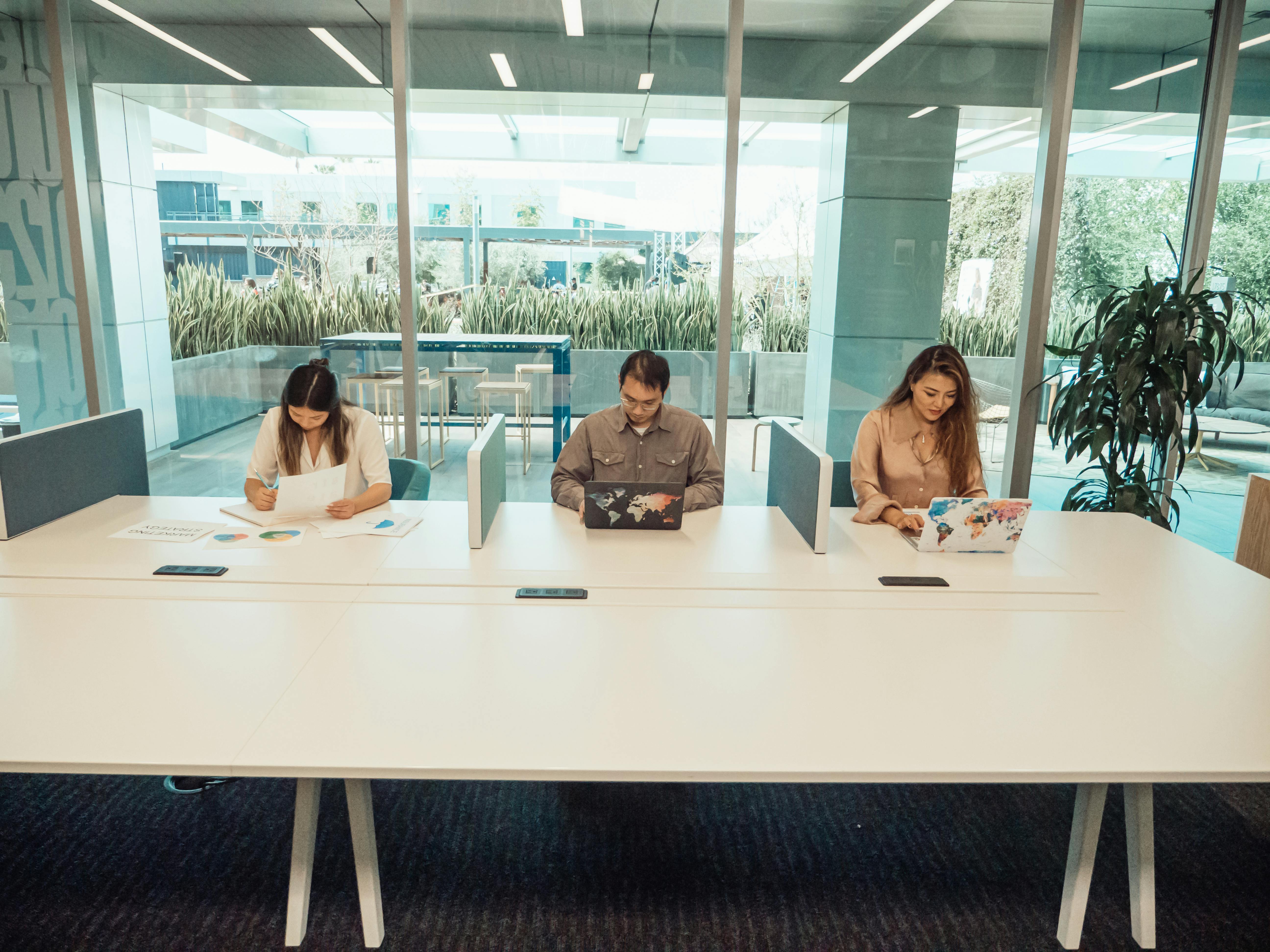
The Honest Bottom Line
The coworking vs home working question is not a binary to be resolved — it's a spectrum to be calibrated.For professionals who work productively from home, have adequate home office infrastructure, and have either a small team or sufficient professional community through other channels, the case for adding a coworking membership is modest. The cost has to justify the benefit.
For professionals who find home working isolating, lack adequate home office space, miss the social fabric of professional community, or need a client-facing environment on some days, coworking is the most practical solution in the Australian market in 2026. It provides what home working structurally cannot — community, professional environment, and the accountability of being around other working people — at a price point that is genuinely accessible for most knowledge workers.
The most common optimal arrangement in Australia right now is a hybrid model: 2–3 days from home, 1–2 days at a coworking space, with a home office setup good enough for solo focused work. That mix captures the commute savings and cost benefits of home working without surrendering the professional community and client-facing capability that a coworking space provides.
Explore Coworking Options Across Australia
If you're considering adding a coworking membership to complement home working, Australia's market has options at every price point — from $30/day passes for occasional use to full-time memberships from $350/month in suburban locations.Browse coworking spaces across Australia on OfficeFlexFinder — filter by city, price, and desk type to find the right entry point for how you actually work.
You can also explore:
- How much does coworking cost in Australia in 2026?
- What is a hot desk? Everything you need to know
- The rise of suburban coworking: why businesses are relocating
- Hybrid work in 2026: what office do hybrid teams need?
- How to find and book flexible office space: step-by-step
About OfficeFlexFinder: We help Australian businesses, freelancers, and remote workers find and compare flexible office space — from hot desks to private offices and serviced suites — across every major city and region in Australia.
Arthur Truong
Content Editor
Office space specialist helping businesses find their perfect workspace.
